A writer ran the numbers on how much time was actually left
By the Time You Left Home, You Had Already Spent 93 Percent of Your Time With Them
In 2015, Tim Urban sat down and counted the days he had left with his parents. He was healthy, they were healthy, nothing was wrong. The number still came back smaller than a single year of his childhood.
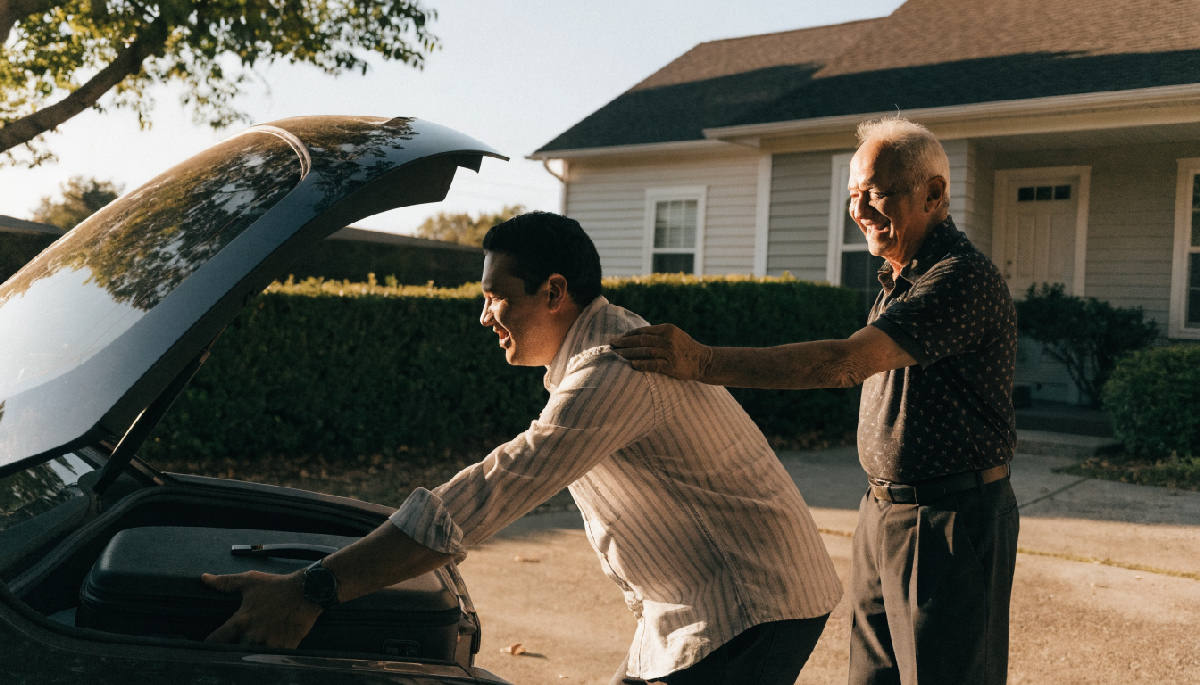
Most people never do this math, because it feels morbid to try. But the essay that did, Tim Urban's "The Tail End," was not written about death at all. It was written about ordinary distance: growing up, moving out, and seeing your parents a handful of days a year instead of nearly every day.
**By the time a typical person graduates high school and leaves home, they have already used up about 93 percent of the total in-person time they will ever spend with their parents.** Not because anyone is sick. Just because childhood is the part of life where you happen to live in the same house.
After that, the visits get counted differently: a few days at a time, a few times a year. **The average adult sees a parent who lives elsewhere around 10 days a year.** Keep that pace for a few more decades and the number of days left, real days, not years, turns out to be smaller than almost anyone expects.
1. The math nobody runs until it is already true
Urban's calculation was simple, almost embarrassingly so. Count the visits, not the years. **A childhood spent mostly in the same house adds up to thousands of days of contact. A decade of adult visits, a few days at a time, adds up to maybe thirty or forty.**
That is what makes 93 percent land so hard. It is not a statistic about illness or old age. It is a statistic about a totally healthy, ordinary life, the one almost everyone is already living. The steep part of the curve happens the moment you move out, long before anyone starts worrying about time running low.
For most people, the majority of their lifetime with a parent is already behind them well before either person is old.
2. It is not only parents. It is anyone you no longer live beside
Urban ran the same math on his two sisters, who grew up under one roof with him and were down to about 15 percent of their remaining time together. He ran it on the friends he saw five days a week in high school, now scattered, down to roughly 7 percent.
**The pattern is not about mortality. It is about proximity.** Once two people stop living in the same place, the relationship runs on a fixed, small budget of visits, and that budget spends down quietly, one ordinary weekend at a time, with no obvious moment that marks it.
Every relationship that used to run on daily proximity now runs on a countable number of visits, whether or not anyone is keeping count.
3. You cannot get the days back. You can make the ones left count
None of this is an argument to panic or to move back home. It is an argument for what to do with an ordinary Sunday visit once you know it is not unlimited: **ask the question you have been meaning to ask, and keep the answer.**
With LifeScribe, Ari can spend part of one of those visits asking your parent, your sibling, or an old friend to tell a story in their own words, and keep it exactly as they told it. Not a photo of the visit. The story that made the visit worth having.
The visits left are few and countable. What gets said inside them does not have to be lost the same way the days are.
I did the math on my dad and it was smaller than I wanted to know. Instead of spiraling about it, I started using our Sunday calls to actually ask him things, and Ari helped me keep the answers. Now I have his voice telling stories I would have otherwise just forgotten I heard.Danielle, 41, recording her father's stories on their weekly call
What you get with LifeScribe
- No special trip required: the next ordinary visit or phone call is enough to start.
- Ari asks the follow-up question that turns small talk into a story worth keeping.
- The recording becomes a keepsake in their own words, not a memory you are hoping you recall correctly later.
- Built around a simple fact: the number of visits left is smaller than it feels, for everyone.
Start free, with nothing to lose
Try it on the next ordinary visit or phone call, free. Nothing to install, nothing to learn. If it does not feel like it kept something real, you have lost nothing but a few minutes.
**The days already used cannot be added back, and the days still left are fewer than they feel.** You do not need a special occasion. You need the next ordinary visit, call, or Sunday dinner.
The next ordinary visit is one of the ones you have left.
Let Ari help turn it into something your family keeps in their own voice, not just a visit you remember having.
Questions grandparents ask us
Is the 93 percent statistic real, or just a striking-sounding claim?
It comes from Tim Urban's 2015 essay "The Tail End" on Wait But Why. Urban counted his own in-person time with his parents: nearly daily through age 18, then roughly 10 days a year afterward. Run that math forward and the days already spent by the time someone leaves home come out to about 93 percent of their likely lifetime total, assuming an ordinary, healthy life span for both people.
Does this only apply to parents?
No. Urban ran the same calculation on his sisters (about 15 percent of their time together left after growing up in the same house) and his closest high school friends (about 7 percent left). Any relationship that used to run on daily proximity and now runs on scheduled visits follows the same pattern.
Is the point of this to make people anxious about time running out?
No. The point is the opposite: once you know the visits are a countable, smaller number than they feel, it becomes easier to use the next one well instead of assuming there will always be another one exactly like it.
What does LifeScribe actually do during a visit or call?
Ari asks a real question and lets the person answer in their own words, then keeps that answer as a recording. It works over a phone call or in person, and takes minutes, not hours.
What happens to what gets recorded?
Each story becomes a keepsake you and your family can read and share later, so a visit that would have just passed becomes something you actually kept.
https://getlifescribeapp.com/blog/already-spent-93-percent-of-your-time-with-them