Researchers asked Agta foragers in the Philippines who they would most like to live with.
Researchers Asked Almost 300 Hunter-Gatherers Who They Most Wanted to Live With. The Best Storytellers Were Chosen Nearly Twice as Often.
In a 2017 study, Daniel Smith and colleagues found that skilled storytellers were nearly twice as likely to be chosen, ahead of the best hunters and fishers.
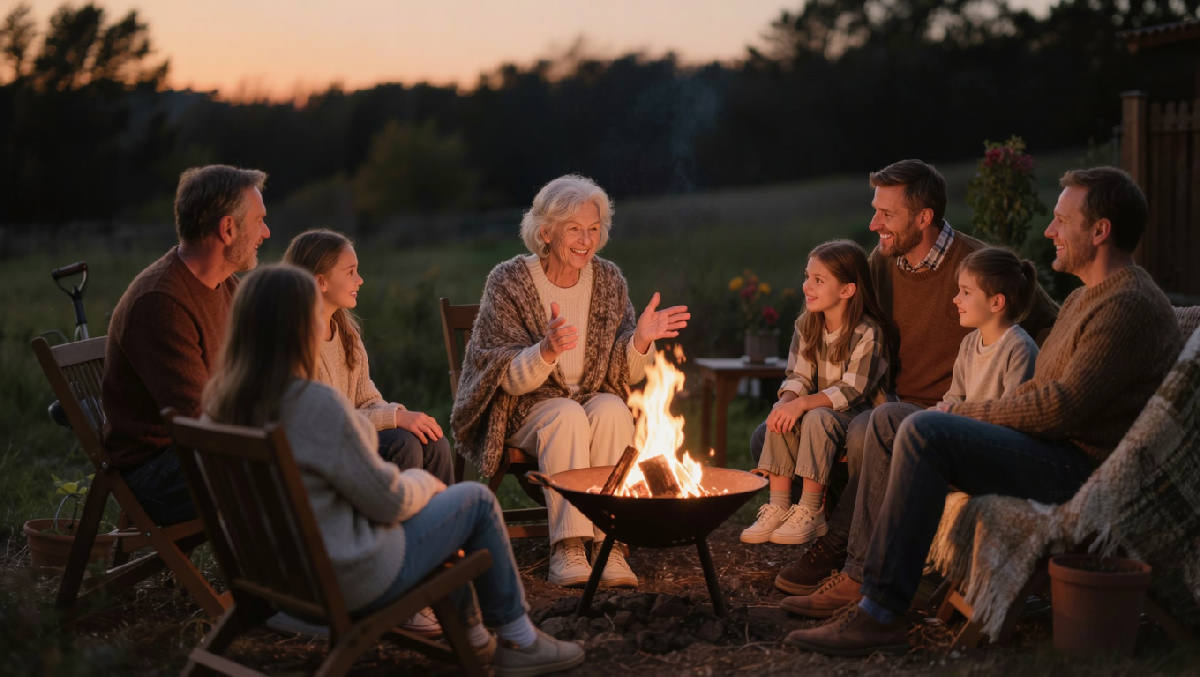
Long before there were books, there was someone who knew how to tell it well. The story at the end of the day was how people learned who they were.
Researchers asked a simple question in 18 camps: **who would you most like to live with?** The answer was not the best hunter.
The study was about hunter-gatherers, not modern families. Still, it hints at something we already feel: **the person who tells the stories is the one we want close.**
1. They asked almost 300 people to pick their neighbors
The team worked with the **Agta, a hunter-gatherer people in the Philippines.** In **18 camps,** almost 300 people were asked to name the best storytellers among them, and to name the people they would most like to live with.
Skill was rated by **peers,** meaning the people who actually listened.
The judges were the listeners, not the researchers.
2. The storytellers were chosen nearly twice as often
**Skilled storytellers were nearly twice as likely to be nominated** as people seen as less skilled. In the reporting on the study, storytelling ranked above skills like hunting and fishing.
Camps with more skilled storytellers also showed **more cooperation.** The authors suggest one old job of storytelling was to help people work together.
A good story kept people close, and kept them working together.
3. What the stories were for
The Agta stories carried lessons about **cooperation and equality,** and similar themes appear in the stories of other foraging peoples. The authors also report that skilled storytellers had, on average, about **0.53 more living children,** an association and not proof of cause.
Here is the honest limit. This was a **foraging community, not a modern family,** and the study did not test recording or what families do with stories today.
Stories have always been how a people stays together.
Skilled storytellers are preferred social partners.Smith et al. (2017), Nature Communications
What you get with LifeScribe
- A 2017 study asked almost 300 Agta people in 18 camps who they would most like to live with.
- Skilled storytellers were nearly twice as likely to be chosen, and camps with more of them cooperated more.
- The study did not test modern families or recording, so this page makes no claim about them.
- Built on documented research: Smith et al., Nature Communications, volume 8, article 1853, 2017.
Start free, with nothing to lose
Just a phone call, free. Ari listens, asks about your life, and keeps your stories in your own voice for the people you love.
Somewhere in your family there is a person everyone wants to sit beside, because of the way they tell it. Their stories are worth keeping. It is just a phone call.
Keep the stories of the person everyone listens to.
Ari calls, listens, asks what comes next, and keeps your stories in your own voice for the people you love.
Questions grandparents ask us
What did the study actually find?
In a 2017 study in Nature Communications, skilled storytellers among the Agta of the Philippines were nearly twice as likely as less skilled people to be named as someone others wanted to live with. Camps with more skilled storytellers also showed more cooperation.
Who ran it?
Daniel Smith, Andrea Migliano, Lucio Vinicius and colleagues. It appeared in Nature Communications, volume 8, article 1853, in December 2017.
How many people were studied?
Almost 300 people from 18 Agta camps took part, according to the university press release.
Does it say anything about modern families or recording stories?
No. It studied a foraging community. It did not test modern families, recording, or any product, so this page makes no claim about them.
https://getlifescribeapp.com/blog/the-first-storytellers-were-chosen