Researchers asked one friend to describe a recent experience to another on video. Some listeners were fully attentive. Some were distracted on purpose.
Researchers Had 128 Pairs of Friends Talk on Video. When the Listener Was Distracted, the Storyteller Remembered Less in the Moment.
In a 2023 study in Memory, Azriel Grysman, Melanie Baime, and Ethan Cantor found that the listener changed how much the speaker recalled while telling the story.
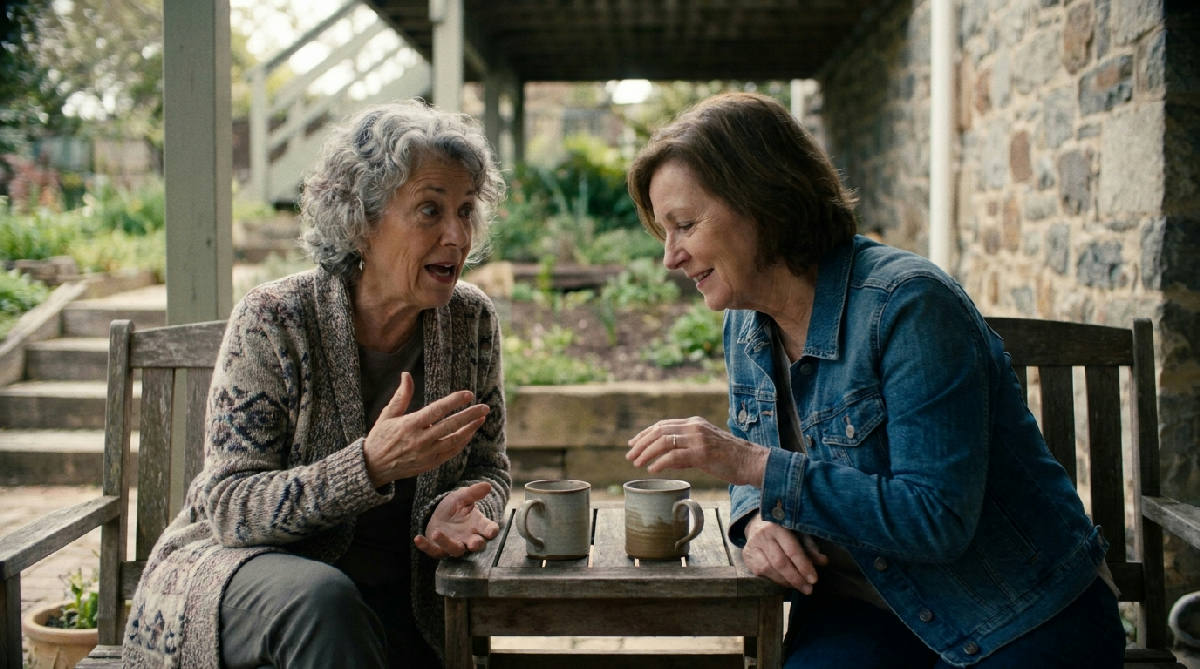
We tend to think a memory lives inside the person who has it. Tell it, and it comes out the way it went in.
A study of 128 pairs of friends suggests the person across from you has a say. **When the listener was attentive, the storyteller recalled more** than when the listener was distracted.
It is a small, careful result with an honest limit, and it is worth reading closely, because it is about something most of us do every week without noticing: tell a story to somebody, and hope they are there.
1. One friend told a story. The other was told how to listen.
In the study, friends talked over video. One of them described **a recent negative experience.** Listeners were randomly assigned to be **attentive or distracted.**
The researchers then coded the stories for factual content and for interpretive content, meaning what the speaker made of what happened.
Same friends, same kind of story. The only thing changed was how the listener listened.
2. The speaker recalled more when someone was really listening
The authors report that **attentive listening was linked to better recall by the speaker** in the first session, while they were in the conversation.
About four weeks later, speakers and listeners were each asked separately to recall that earlier conversation. **Attentive listening was linked to better recall by the listener** at that point.
A good listener helped the story come out fuller, and helped the listener keep it.
3. The speaker's edge did not clearly last
Here is the honest part. **Attentive listening was not linked to the speaker's own recall four weeks later.** The authors note it is unclear whether the effects last beyond the conversation itself.
This was friends, a recent negative experience, and a video call. It did not test families, older adults, or long stories, so it cannot say what a parent's telling is worth to a child. It does say that **a story is not told alone.** Who is listening changes how it comes out.
The listener shapes the telling. Whether it lasts is still an open question.
Attentive listening was associated with better speaker recall at time 1 and better listener recall at time 2, but not with speaker recall at time 2.Paraphrased from the abstract, Grysman, Baime, and Cantor (2023), Memory
What you get with LifeScribe
- A 2023 study in Memory randomly assigned 128 pairs of friends an attentive or distracted listener.
- Attentive listening was linked to better recall by the speaker during the conversation.
- Four weeks later, the listener remembered more after attentive listening, but the speaker's own recall was not clearly better.
- Built on documented research: Grysman, Baime, and Cantor, Memory, 2023.
Start free, with nothing to lose
Just a phone call, free. Ari listens, asks about your life, and keeps your stories in your own voice for the people you love.
Most of what people know about their family was told to somebody, once, by somebody who was listening. When the teller is gone, so is the telling. The stories that never get a listener are the ones that go unsaid.
Give your story someone who listens.
Ari calls, listens, and keeps your stories in your own voice for the people you love.
Questions grandparents ask us
What did the study actually find?
In a 2023 study in Memory, attentive listening was associated with better recall by the speaker during the conversation and better recall by the listener about four weeks later. It was not associated with the speaker's own recall four weeks later.
Who ran it?
Azriel Grysman, Melanie Baime, and Ethan Cantor. It appeared in Memory, volume 31, issue 10, pages 1425 to 1436, and involved 128 pairs of friends.
How were the listeners different?
Listeners were randomly assigned to be attentive or distracted while a friend described a recent negative experience over video.
Does the study say anything about families?
No. It studied friends on video calls, not families, so this page does not claim anything about what a parent's stories are worth to their children.
https://getlifescribeapp.com/blog/the-listener-shapes-the-story