For anyone who has ever wondered what they will actually leave behind
The Original Will Left No Money At All
Long before lawyers wrote wills that divided money, families wrote something called an ethical will. It divided nothing. It just said what mattered.
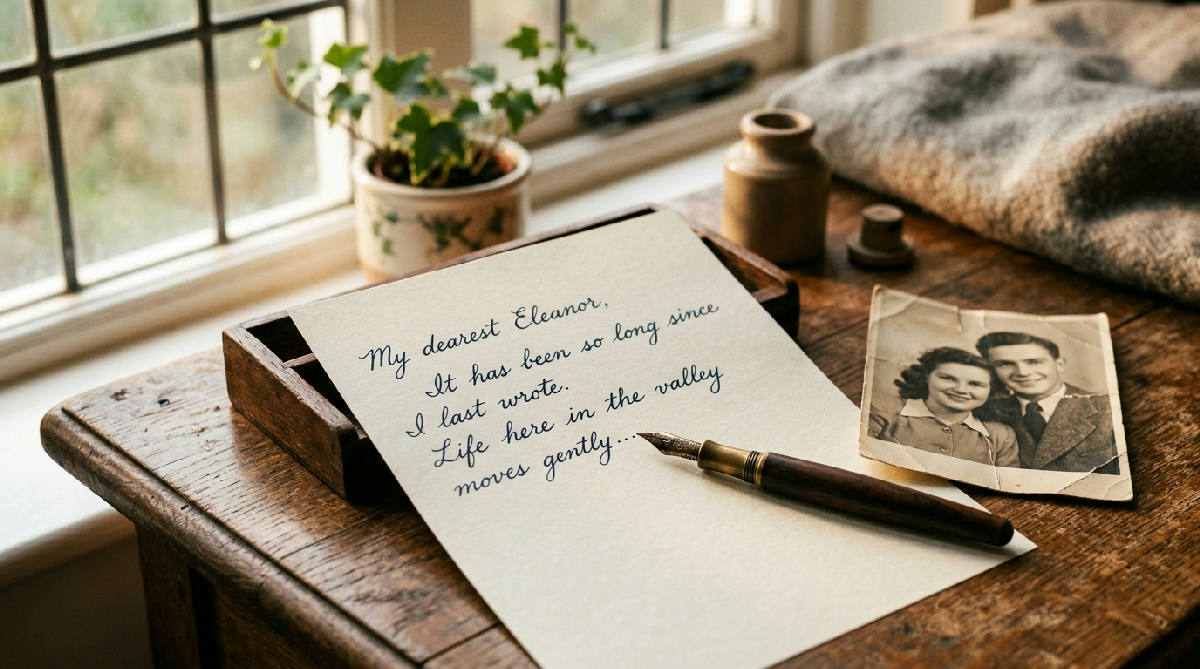
In Genesis 49, an old man named Jacob calls his sons to his bedside. He does not talk about who gets the land or the herds. He goes son by son and tells each one what he sees in him, what he hopes for him, and what he wants him to remember. Scholars point to that scene as the oldest template for something Jewish tradition would later give a name: the ethical will.
The practice got a paper trail. The earliest known written ethical will comes from a rabbi in Worms named Eleazar, writing around the year 1050: "Think not of evil, for evil thinking leads to evil doing." Over the next three centuries, families across Spain, Germany, and France kept the tradition going, writing letters meant not to divide an estate but to pass down what a lifetime had taught them.
**An ethical will carries no money and settles no property. It has outlasted plenty of documents that did.**
1. What an ethical will actually is
An ethical will, sometimes called a legacy letter, is not a legal document. It does not go through probate and it does not replace a will or an estate plan. **It is a letter of values, memories, and hopes, written to be read by the people you love, not filed with a court.**
The tradition is not confined to one faith or one century. Jewish families kept it alive for a thousand years, and it has since been adopted well beyond that: Christian and Muslim families write versions of it too, and in 2009 Barack Obama published an open letter to his daughters that reads, in structure and spirit, like a modern ethical will.
A legal will says who gets what you own. An ethical will says who you were.
2. Where the tradition comes from
Early rabbis first passed these teachings on out loud, father to son, the way families have always passed down what matters. Eleazar of Worms wrote his down around 1050, and the practice of putting it on paper spread from there. **Judah ben Saul ibn Tibbon wrote one to his son around 1190. Asher ben Yechiel wrote another in the 14th century.** Each one reads less like a legal instrument and more like a parent who ran out of time to say everything out loud, so they wrote it down instead.
None of these letters mention money. They talk about how to treat people, what to study, what to forgive, and what to hold onto. That is what survived. Not the ledger, the letter.
The families who wrote these letters did not know they would still be read a thousand years later. They wrote them anyway.
3. Why estate professionals still recommend it
Modern financial and estate planners often suggest an ethical will as a companion to a legal one, precisely because a legal will is silent about everything that actually made you who you are. **It can divide a house. It cannot tell your grandchildren why you worked the job you worked, or what you were afraid of, or what you would tell them if you had one more phone call.**
You do not need to write yours the way Eleazar of Worms did, with a pen, alone, at a desk. With LifeScribe, you talk it out loud on an ordinary phone call, the same way you would tell your family a story in person, and Ari turns it into a keepsake in your own words.
Your children already inherit what you own. What they remember about who you were is still up to you to leave behind.
I always meant to write something like that for my kids someday. Then I read where the tradition actually came from and realized 'someday' had already been years. Ari and I recorded my first one on a Sunday afternoon call, and it took less time than I expected.Marcus, 51, recording his values for his children
What you get with LifeScribe
- No writing and no blank page: you talk, Ari listens.
- A warm guide asks the question, so you never start from nothing.
- Your values and stories become a keepsake in your own voice.
- A living record your family can return to for generations.
Start free, with nothing to lose
Try it with one memory, free. There is no software to learn, just a phone call. If a single preserved story is not worth a few minutes of your time, you have lost nothing and gained one memory you would not otherwise have.
Jacob did not wait for a diagnosis or a deadline to gather his sons. **The best-known ethical wills were not written from a hospital bed. They were written by people who simply decided not to wait.** You do not need a reason to start either.
Your children already inherit your money. Give them your voice too.
Pick a call you already have planned this week. Spend a few minutes of it capturing one value or one memory instead of letting it pass like an ordinary Tuesday.
Questions grandparents ask us
Is an ethical will a real legal document?
No. An ethical will, sometimes called a legacy letter, has no legal force and does not replace a will or an estate plan. It is a personal letter of values and memories, meant to be read, not filed with a court.
Do I need to be religious to write one?
No. The tradition began in Jewish families, but people of every faith, and no faith at all, write versions of it today, including public examples like Barack Obama's 2009 letter to his daughters.
Do I have to write it myself?
No, that is the point. With LifeScribe you talk it out loud on a phone call and Ari turns it into a written keepsake, the same way you would already tell a story to your family in person.
What if I only record one thing?
Then you have one thing you did not have before. There is no minimum and no deadline. Many families start with a single call and add more over time.
What happens to what I record?
Each memory becomes a keepsake your family can read and share, building into a living record of what you believed and what you lived through, in your own words.
https://getlifescribeapp.com/blog/the-original-will-left-no-money-at-all