Researchers at Harvard Business School asked people to seal everyday moments in a time capsule, then guess how much they would care when it was opened. They guessed too low.
Researchers Had People Seal Their Ordinary Days in a Time Capsule. Months Later, They Were Far More Curious Than They Predicted.
In a 2014 study in Psychological Science, Ting Zhang, Taeya Kim, Alison Wood Brooks, Francesca Gino, and Michael Norton found that people underestimate how much they will enjoy rediscovering their past, and most of all the ordinary parts of it.
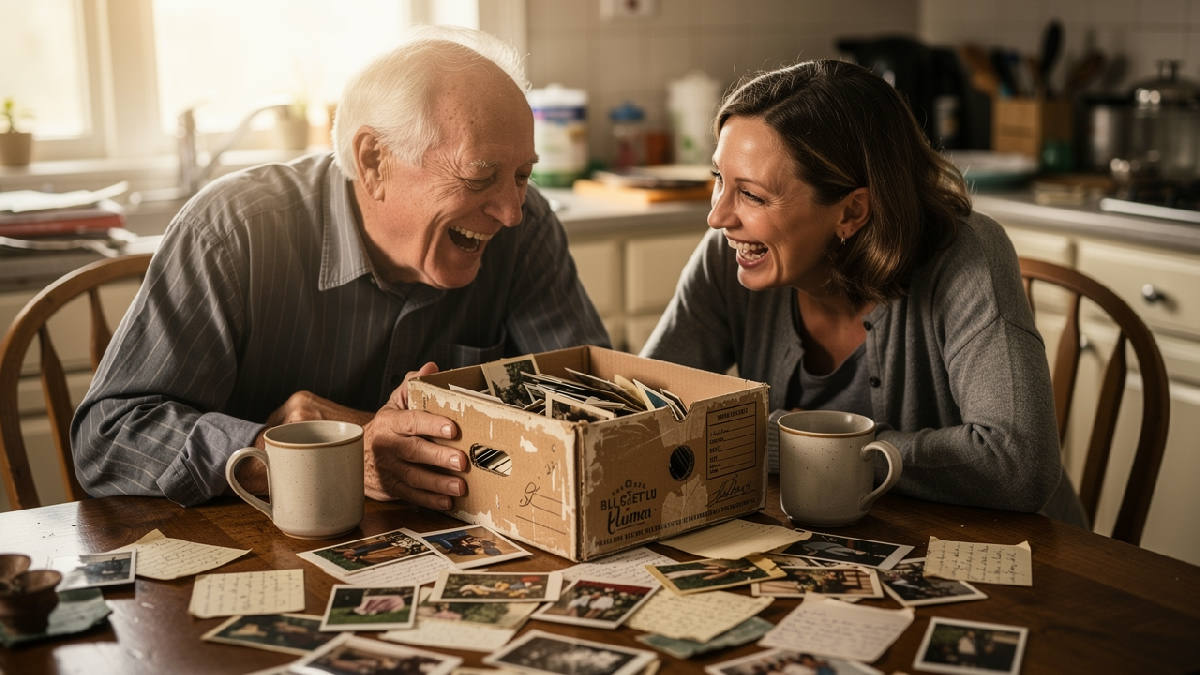
Most of us keep the big days. The wedding, the graduation, the trip. The Tuesday dinner, the phone call about nothing, the way someone told a story at the stove, those slip by because they do not feel like anything worth keeping.
A research team at Harvard Business School put that feeling to a test. They asked people to record a snapshot of their everyday lives, seal it up, and predict how interesting it would be to open later. **Almost everyone guessed too low.**
The surprise is not that old moments are nice to revisit. It is that we are so sure, in the moment, that they will not be.
1. People sealed up the everyday, then guessed how much they would care
In the core experiment, participants built **a time capsule of ordinary life**: recent conversations, a social event, small details of what they were up to. Before opening it, they rated how curious, surprised, and interested they expected to be.
Months later they opened it and rated the same things again. The authors report that **people underestimated their later curiosity, surprise, and interest.** The capsules were more interesting than their past selves had predicted.
The people who sealed the capsule were the worst judges of what it would be worth.
2. The gap was widest for the most ordinary moments
The researchers compared everyday experiences with more extraordinary ones. **The people were fairly accurate about the memorable stuff,** and **most off about the routine, day-to-day details.**
That matters because the ordinary is exactly what we never think to keep. A birthday gets photographed. The way a grandmother hummed while she cooked does not.
What feels too small to record is often what we are most surprised to get back.
3. They skipped the record, then wished they had it
In a further experiment, participants chose between writing down a conversation for the future and watching a video. Most picked the video. **A month later, the majority said they would rather have read what they wrote** than watched it.
The authors describe this as a time-inconsistent choice: **people underrate the value of looking back, so they do not make the record, and then they want it.** The study was done with students and adults rediscovering their own records, not with families, so it cannot say what a parent's story is worth to a child. It does say something about the moment you decide not to bother.
The moment you skip the record is the moment you are least able to see why it matters.
Individuals underestimate the extent to which rediscovering experiences from the past will be curiosity provoking and interesting in the future.Zhang, Kim, Brooks, Gino, and Norton (2014), Psychological Science
What you get with LifeScribe
- A 2014 study in Psychological Science found people underestimate how interesting it will be to rediscover their own past.
- The gap was largest for ordinary, everyday moments, not the big milestones.
- People who skipped making a record still wanted it later, even when they had chosen something else at the time.
- Built on documented research: Zhang, Kim, Brooks, Gino, and Norton, Harvard Business School, 2014.
Start free, with nothing to lose
The ordinary stories are worth keeping. Just a phone call, free. Ari asks about a regular day, a kitchen, a street, a Sunday, so it is kept in your own voice for the people you love.
Nobody feels the loss of an ordinary day while it is happening. That is the whole finding. The stories that sound too small to tell are the ones that go unspoken, and by the time anyone wants them, there may be no one left to ask.
Keep the ordinary parts too.
Ari calls and listens, so the small everyday stories are kept in your own voice for the people you love.
Questions grandparents ask us
What did the study actually find?
A 2014 study in Psychological Science found that people underestimated how curious, surprised, and interested they would be when they later rediscovered records of their own everyday lives.
Who ran it?
Ting Zhang, Taeya Kim, Alison Wood Brooks, Francesca Gino, and Michael Norton, at Harvard Business School. It appeared in Psychological Science, volume 25, issue 10.
Were ordinary moments really undervalued more than big ones?
According to the authors, yes. Participants were fairly accurate about extraordinary experiences but underestimated their later interest in mundane ones.
Does the study say anything about families?
No. Participants were rediscovering their own records. The findings do not measure what a parent's recorded stories are worth to their children, so this page does not claim that.
https://getlifescribeapp.com/blog/the-photo-you-didnt-take-of-an-ordinary-day