For anyone who grew up with a grandmother who just showed up
The Real Reason Humans Have Grandmothers At All
Almost no other species has females who live for decades after they can no longer have children. Evolutionary biologists think they have found out why, and it comes down to one thing: grandmothers who kept showing up.
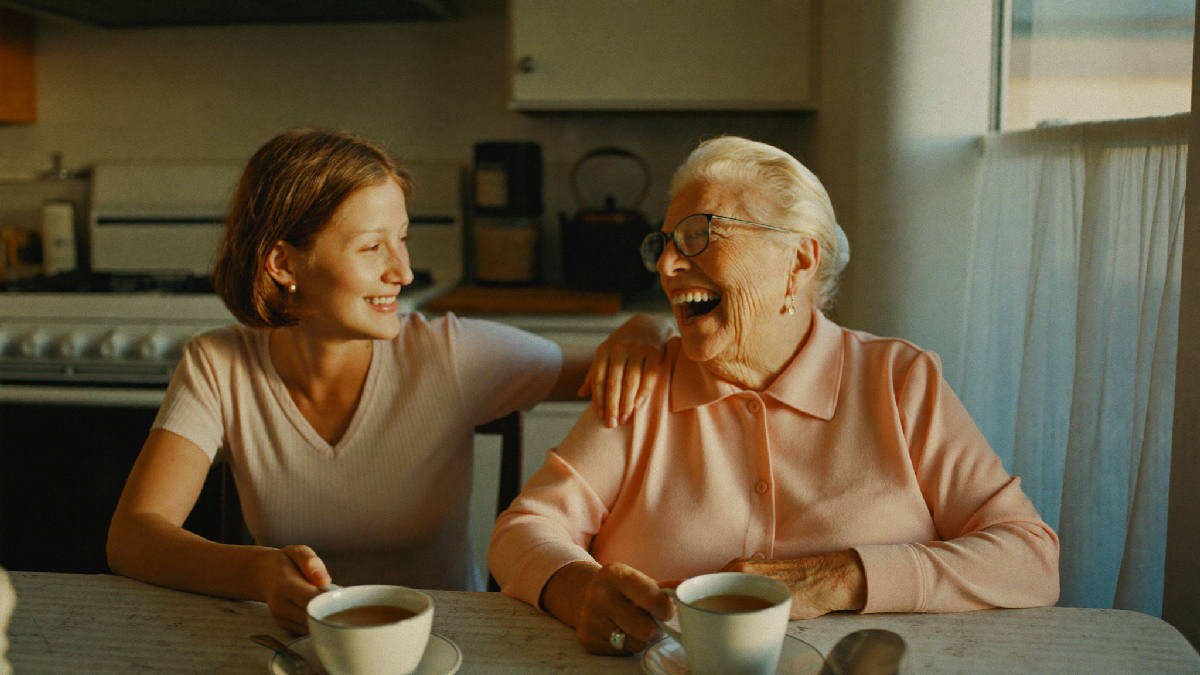
Menopause is strange, evolutionarily speaking. In almost the entire animal kingdom, females stay fertile until the day they die. Humans are one of a small handful of exceptions, alongside orcas and a few other whales. **A woman can live thirty, forty, even fifty years past the point she can have children of her own, and for a long time biologists could not explain why evolution would allow that.**
In the 1990s, anthropologist Kristen Hawkes went looking for the answer among the Hadza, a hunter-gatherer community in Tanzania, and found it in the last place evolutionary theory usually looks: the grandmothers.
1. The women who stopped having children were the ones keeping everyone else's children alive
Hawkes and her team tracked how Hadza women spent their days and noticed something: once a woman was past the age of having more children herself, she did not slow down. She foraged harder, often outworking younger women, and brought back food that went straight to feeding her weaned grandchildren.
**The math worked out in her favor. A grandmother who kept gathering food let her daughter wean the next baby sooner and have another child faster, without either child going hungry in the gap. Her own genes, carried forward by her grandchildren, did better because she stuck around and kept working.**
Grandmothers who kept showing up made their whole family line more likely to survive, generation after generation.
2. It may be the reason humans live as long as we do at all
Hawkes' hypothesis, first proposed in the 1990s and since supported by mathematical population models published in the Proceedings of the National Academy of Sciences, argues this is not a side effect of human longevity. It may be a cause of it. Once grandmothering started paying off, evolution had a reason to select for genes that let women live long past their fertile years, a trait almost no other species on Earth shares.
**The traits that make humans unusual, our long childhoods, our large brains, our dependence on people beyond our own parents, may trace back in part to one thing: a grandmother who chose to keep helping instead of stepping back.**
The long childhood that lets a human brain grow may exist because grandmothers made it survivable.
3. You do not have to forage to be the reason your family keeps going
No one in a Hadza camp needed a grandmother to give a speech about her legacy. She proved it by showing up every day with something to give. That is still the version of legacy that actually reaches people: not a document, but a presence.
**With LifeScribe, Ari asks the questions that turn a grandmother's ordinary phone call into something her grandchildren can keep. The stories about how she grew up, what she learned, who she lost, become as much a part of what she leaves behind as anything she ever gathered.**
The oldest form of legacy on record is not a will. It is someone who kept showing up, and someone who remembered what she said.
My mom always says she does not have anything special to pass down. I told her about the grandmother hypothesis, that showing up is the whole inheritance, and she let me record her telling me about her own grandmother that same afternoon. Twenty minutes we will have forever.Elena, 38, recording her mother's stories
What you get with LifeScribe
- Ari asks the kind of questions that get a grandmother, or anyone, talking honestly about the life she actually lived.
- No fieldwork, no fossil record, no evolutionary biologist required: the instinct that shaped grandmothers for hundreds of thousands of years works on a phone call you already have planned.
- Every conversation becomes a keepsake your family can return to, not a story that only existed the one time it was told.
- Built on the same idea evolution bet on: showing up and passing something on is what actually lasts.
Start free, with nothing to lose
Try it on a call you already have planned this week, free. There is nothing to install and nothing to learn. If turning an ordinary conversation into something that lasts does not feel worth it, you have lost nothing but a few minutes.
**Evolution had hundreds of thousands of years to prove that grandmothers showing up mattered.** Most families do not get that kind of time with the people who shaped them. The stories your family could keep right now will not wait for a research team to prove their value.
You do not need a research team. You need to press record.
Pick a call you already have planned this week. Ask one real question, and this time, keep the answer.
Questions grandparents ask us
Is the grandmother hypothesis a real, accepted scientific theory?
It is a well studied hypothesis in evolutionary anthropology, first proposed by Kristen Hawkes and colleagues in the 1990s based on fieldwork with the Hadza people of Tanzania, and supported since by mathematical population models published in journals including the Proceedings of the National Academy of Sciences. Some researchers treat it as one of several contributing explanations for human longevity rather than the sole cause, but it remains one of the most cited theories in the field.
Why is menopause so unusual in the animal kingdom?
In most species, females remain fertile for close to their entire natural lifespan. Humans are one of only a handful of known exceptions, alongside orcas and a few other toothed whale species, where females routinely live decades past the end of their reproductive years.
What did Kristen Hawkes actually observe?
Studying the Hadza, a hunter-gatherer community, Hawkes found that older women who could no longer bear children often foraged more, not less, and that their food gathering directly supported their weaned grandchildren, freeing their daughters to have more children sooner.
What does this have to do with recording my own family's stories?
The grandmother hypothesis suggests that showing up and contributing, generation after generation, is at the root of what makes families endure. LifeScribe exists on a similar premise: capturing the presence and stories of the people in your family, in their own words, before that presence becomes memory.
https://getlifescribeapp.com/blog/the-real-reason-humans-have-grandmothers-at-all