You probably think of nostalgia as a place: a hallway, a summer, a house that is not there anymore. Psychologists who actually studied thousands of nostalgic memories found something different.
Researchers Studied Thousands of Nostalgic Memories. Almost None of Them Were About a Place.
Tim Wildschut and Constantine Sedikides ran a content analysis of real nostalgic narratives and found they are almost never really about a place. They are about people. A separate experiment found that when people are made to feel lonely, their minds do not wander. They go straight to one thing: family.
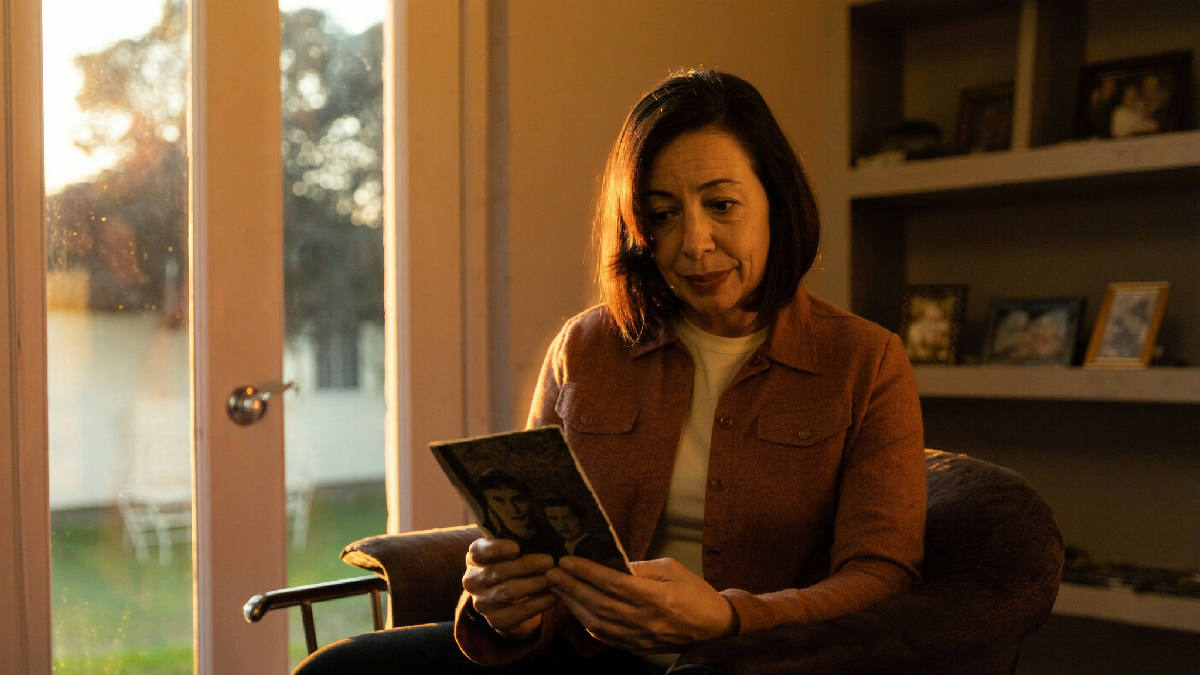
Wildschut, Sedikides, Arndt, and Routledge published their study in the Journal of Personality and Social Psychology in 2006, after collecting and coding real nostalgic narratives from participants. **The pattern held again and again: nostalgic memories typically feature the self surrounded by other people, most often close others like family and friends, and they carry far more warmth than sadness.** A song, a smell, a street corner might be what triggers the memory. The memory itself is almost always about someone.
That alone is a striking finding. **The second study is the one that explains why it matters.** Researchers Xinyue Zhou, Constantine Sedikides, Tim Wildschut, and Ding-Guo Gao published a follow-up in Psychological Science in 2008 that put people in a state of loneliness on purpose, then measured what their minds did next.
Lonely participants scored higher on nostalgia than people in a neutral state, and **the nostalgia that showed up was specifically about close others: language like 'my family' and 'having someone to depend on' appeared over and over.** The mind, faced with isolation, reached for the people who make it feel less alone.
1. What nostalgia is actually made of
Ask someone what they are nostalgic for and they might say a childhood house, a summer, a decade. **But when Wildschut and Sedikides's team coded the actual content of nostalgic accounts, the setting was rarely the point. The people in the memory were.** A birthday, a road trip, a Sunday dinner: what people kept returning to was who else was there.
The tone mattered too. **Nostalgic memories were consistently rated as richer in positive feeling than negative, even when the memory involved something bittersweet, like missing someone who has since died.** Nostalgia is not just remembering. It is remembering in a way that keeps the good part close.
Nostalgia is not really about where you were. It is about who was there with you.
2. The alarm bell that goes off when you are alone
Zhou, Sedikides, Wildschut, and Gao wanted to know whether nostalgia was just a pleasant side effect of memory, or something the mind reaches for on purpose. **So they induced loneliness in participants directly, then measured their nostalgia, and compared it against a control group who felt nothing in particular.** The lonely group scored meaningfully higher.
What they were nostalgic for was the telling part. **It was not nostalgia for anything general. It clustered specifically around close relationships, family most of all, and having someone to count on.** The researchers concluded that people were recruiting nostalgia to counter the loneliness itself, drawing comfort from memories of the people who make them feel connected.
When the mind feels alone, it does not drift. It goes looking for family.
3. What to do with what your mind already knows
Your mind has already told you what matters most. **It reaches for family the moment things feel hard, before you have consciously decided to think about anyone at all.** The people who show up in that reflex are usually the same people worth actually keeping something from.
With LifeScribe, Ari can turn an ordinary phone call with your parents, your siblings, your grandparents into a real recording of their voice, their stories, the way they actually talk. **You do not have to wait until you are lonely to reach for it. You can keep it while you still have the chance to ask.**
The people your mind reaches for are the ones worth recording while you still can.
My mom lives four states away and I used to only really miss her at night, when the house was quiet. Now when that feeling hits, instead of just sitting with it, I call her and put it on speaker while I make dinner. Ari picked up on a story about her own mother I had genuinely never heard in thirty-one years.Priya, 31, calling her mother on a quiet weeknight
What you get with LifeScribe
- A 2006 content analysis (Wildschut, Sedikides, Arndt, and Routledge) found nostalgic memories are overwhelmingly about close others, especially family, not places or objects.
- A 2008 experiment (Zhou, Sedikides, Wildschut, and Gao) found loneliness directly triggers nostalgia, and that nostalgia clusters specifically around family and dependable relationships.
- Ari helps you act on that reflex before it becomes only a memory: a real conversation with the people your mind already reaches for, kept in their own voice.
- Built on documented, peer reviewed research published in the Journal of Personality and Social Psychology and Psychological Science.
Start free, with nothing to lose
Start with one ordinary call to someone your mind keeps drifting back to, free. Nothing to install, nothing to schedule around. If it does not feel like it kept something worth keeping, you have lost nothing but a few minutes of a call you were glad to make anyway.
**The comfort of nostalgia only works because the people in it were once reachable.** Every nostalgic memory about family was, at some point, an ordinary conversation nobody thought to keep. The research shows exactly who your mind already considers worth holding onto. The only question is whether you keep something from them while you still can.
Your mind already told you who matters. Keep something from them before nostalgia is all you have left.
Let Ari help you turn an ordinary call with the people you reach for into something kept in their own voice, not just a feeling you get when you miss them.
Questions grandparents ask us
What did the nostalgia research actually study?
Tim Wildschut, Constantine Sedikides, Jamie Arndt, and Clay Routledge published a 2006 study in the Journal of Personality and Social Psychology that included a content analysis of real nostalgic narratives. They found these memories typically feature the self in a social context, focused on close others such as family and friends, and are richer in positive than negative emotion.
Does loneliness really cause nostalgia?
A follow-up 2008 study by Xinyue Zhou, Constantine Sedikides, Tim Wildschut, and Ding-Guo Gao, published in Psychological Science, induced loneliness in participants and measured their nostalgia against a control group. The lonely group scored significantly higher, and the researchers concluded people were recruiting nostalgia specifically to counter feelings of isolation.
Why does nostalgia center on family specifically?
In the 2008 study, the nostalgia triggered by loneliness was not generic. Participants' nostalgic thoughts clustered around close, dependable relationships, using language like 'my family' and 'having someone to depend on,' suggesting the mind reaches for the relationships it associates most strongly with feeling secure.
What does nostalgia research have to do with recording a family story?
The research shows your mind already has a reliable answer for who matters most: the people it reaches for automatically when you feel alone. Making an effort to keep something real from those specific relationships, in their own words, turns that reflex into something you actually hold onto rather than just a feeling that passes.
https://getlifescribeapp.com/blog/what-your-mind-reaches-for-when-youre-lonely