Most people have felt it: the pull to pass something on, a skill, a story, a name, to someone who will carry it after you are gone. In 1992, psychologists gave that pull a name and a way to measure it.
Psychologists Found a Name for the Drive to Matter to People You Will Never Meet. It Predicts How Happy You Are, Decades Later.
Psychologists Dan McAdams and Ed de St. Aubin, publishing in the Journal of Personality and Social Psychology, called it generativity: the drive to invest in and be remembered by the next generation. Using the scale they built to measure it, decades of follow-up research, much of it from the long-running MIDUS national study, has found that people who feel this drive strongly report meaningfully higher well-being, years and even decades later.
Erik Erikson, the psychologist who first mapped adulthood into stages, believed midlife carried a quiet choice: either find a way to invest in something that outlasts you, a child, a craft, a story, a lesson passed down, or risk feeling stuck, closed off, and unremembered. **He called the drive to do the first thing generativity, and for decades it was mostly a theory, hard to test and easy to dismiss as armchair philosophy.** In 1992, two researchers changed that.
Dan McAdams and Ed de St. Aubin, publishing in the Journal of Personality and Social Psychology, built the Loyola Generativity Scale, a way to actually measure how strongly someone feels that pull, and then tested it against what people really did with their lives: the mentoring they took on, the stories they told about themselves, the acts of care they extended toward people who were not even born yet. **The drive was real, it was measurable, and it showed up consistently in how people lived, not just how they talked about themselves.**
What came next mattered more. Using that same scale, decades of follow-up research, much of it drawn from the MIDUS study, a large long-running survey of adult life in the United States, has repeatedly found that **people who score higher on generativity go on to report meaningfully higher psychological well-being, not just at the time they are measured, but years and even decades later.** Wanting to matter to people you will never meet, it turns out, is not sentimental. It is one of the more reliable predictors of a well-lived life psychology has found.
1. A theory Erikson could not prove, until someone built a way to measure it
Erikson's original idea, laid out in his 1950 book Childhood and Society, described generativity versus stagnation as the central struggle of midlife: **either channel your energy into the next generation, through parenting, teaching, mentoring, or creating something that outlasts you, or curdle into self-absorption and a nagging sense that your life did not add up to much.** For 40 years, that stayed a compelling idea without a reliable way to test it.
McAdams and de St. Aubin's 1992 paper fixed that. **The Loyola Generativity Scale asked people to rate simple, concrete statements, like whether they felt responsible for improving their neighborhood or enjoyed teaching people things, and it correlated strongly with what those same people actually did: the volunteering, the mentoring, the way they told the story of their own life.** Generativity stopped being a philosophy and became something researchers could track.
A drive psychologists could only theorize about for 40 years became something they could finally measure, and then follow, for decades.
2. Why grandparents, mentors, and record-keepers score highest
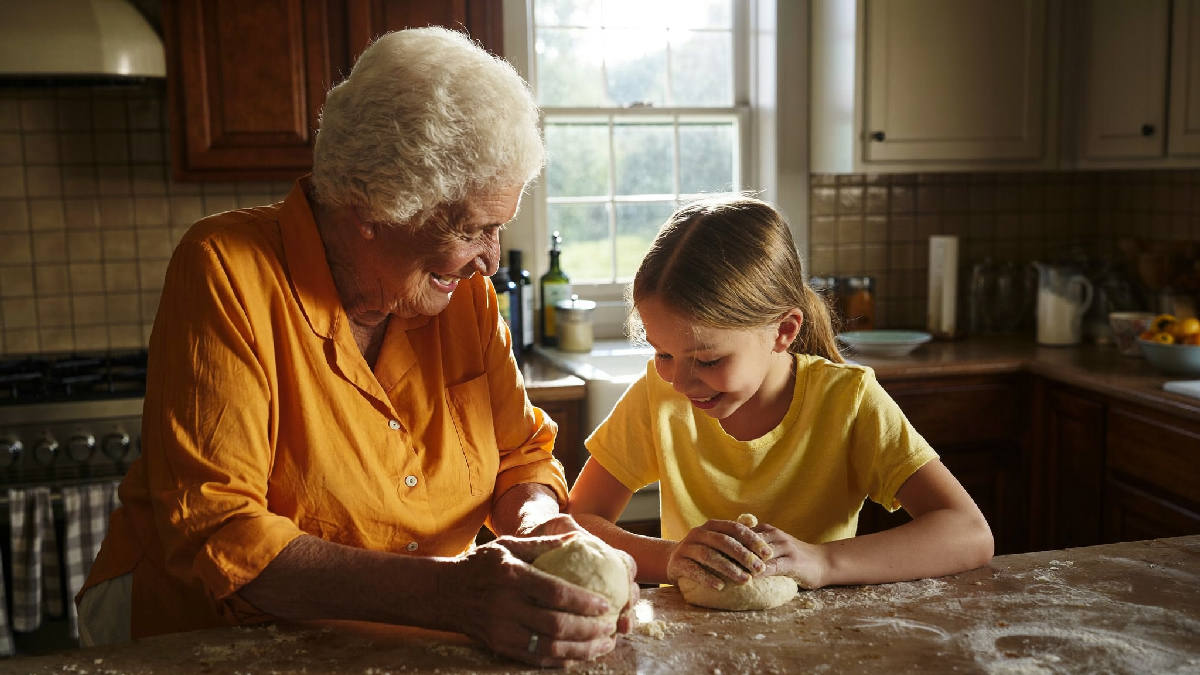
Later research gave the idea a name for how it shows up specifically in later life: **grand-generativity, the role older adults take on as grandparents, mentors, and advisors, creating space for the next generation to grow.** It is not limited to raising your own children. Teaching a grandchild to bake, coaching a neighbor's kid, or simply making sure a family's history does not disappear with you all count.
Studies following custodial and caregiving grandparents have found something specific: **the more generativity someone expressed, the higher their life satisfaction, especially when they felt the young person on the other end of it actually noticed and appreciated it.** The drive to matter to someone who comes after you is strongest, and pays off most, in exactly the kind of ordinary, unglamorous acts of passing something down that rarely get called out as significant at the time.
The people who score highest are not the ones chasing legacy in some grand sense. They are the ones showing up for a grandchild, over and over, in small ways.
3. The record most people never make, until it is too late to
Here is the catch decades of generativity research keeps circling back to: **the drive to be remembered by people you will never meet is strongest in the people least likely to have actually recorded anything, a voice, a story, an answer to the question a grandchild has not thought to ask yet.** Most of what gets passed down happens by accident, in an offhand comment at dinner, and most of it is never captured at all.
**With LifeScribe, Ari turns an ordinary phone call into a real, kept recording, in a parent's or grandparent's own voice, the kind of record that generativity research says matters most and that almost nobody actually makes.** You do not have to write a memoir or sit for a formal interview. You just have to answer the phone.
The drive to matter to future generations is strong. The record of it, without something like Ari, usually is not.
My mom always talked about wanting us grandkids to know where we came from, but it was just talk, we never sat down and actually did it. I set her up with LifeScribe and now she calls Ari like it is nothing, some Tuesday afternoon thing, and there is actually a recording now of her telling the story about how she met my dad. My daughter is going to have that forever.Priya, 44, whose mother now calls Ari most weeks
What you get with LifeScribe
- In 1992, psychologists Dan McAdams and Ed de St. Aubin, publishing in the Journal of Personality and Social Psychology, built the Loyola Generativity Scale to measure the drive to invest in and be remembered by the next generation.
- Decades of follow-up research, much of it from the long-running MIDUS national study, has linked higher generativity to meaningfully better psychological well-being, years and even decades after it is measured.
- Later research found this drive shows up most in later life as grand-generativity, the everyday role of grandparent, mentor, and keeper of the family's stories, and that it correlates with higher life satisfaction.
- Ari helps you actually capture what generativity research says people already want to pass down, before it exists only as an intention.
Start free, with nothing to lose
Start with one ordinary call to someone whose stories you do not want to lose, free. Nothing to install, nothing to schedule around. If the recording does not feel like something your family will be glad to have, you have lost nothing but a phone call you were glad to have anyway.
**The drive to matter to people you will never meet does not fade with age, research finds it if anything grows stronger. What fades is the chance to actually capture it in someone's own voice, while they are still here to answer the phone.**
The drive to be remembered is strongest in exactly the people who never get around to recording it. Make the call before that changes.
Let Ari turn an ordinary phone call into a real, kept recording, in the voice of someone whose stories deserve to outlast this conversation.
Questions grandparents ask us
What exactly is generativity?
Generativity is the psychological term, first proposed by Erik Erikson and later measured by Dan McAdams and Ed de St. Aubin's 1992 Loyola Generativity Scale, for the drive to invest in and be remembered by the next generation, through parenting, mentoring, teaching, or simply passing down a family's stories.
Does this drive actually predict anything, or is it just a nice idea?
Decades of follow-up research, much of it from the long-running MIDUS national study, has found that people who score higher in generativity report meaningfully higher psychological well-being, sometimes measured years or even decades after their generativity was first assessed.
What can someone actually do with this?
Since the drive to be remembered by future generations is strong but the actual record of a family's stories is usually thin or nonexistent, researchers point toward capturing it directly. Ari helps by turning an ordinary phone call into a real, kept recording in someone's own voice.
https://getlifescribeapp.com/blog/the-drive-to-matter-to-people-you-will-never-meet