For anyone who has ever wondered what is actually worth keeping
The Golden Record NASA Built So Humanity Would Not Be Forgotten
In 1977, NASA attached a gold-plated record to two spacecraft: greetings in 55 languages, a mother's first words to her newborn, and one scientist's own heartbeat, recorded two days after she agreed to marry the man who helped choose it all. It is still out there today.
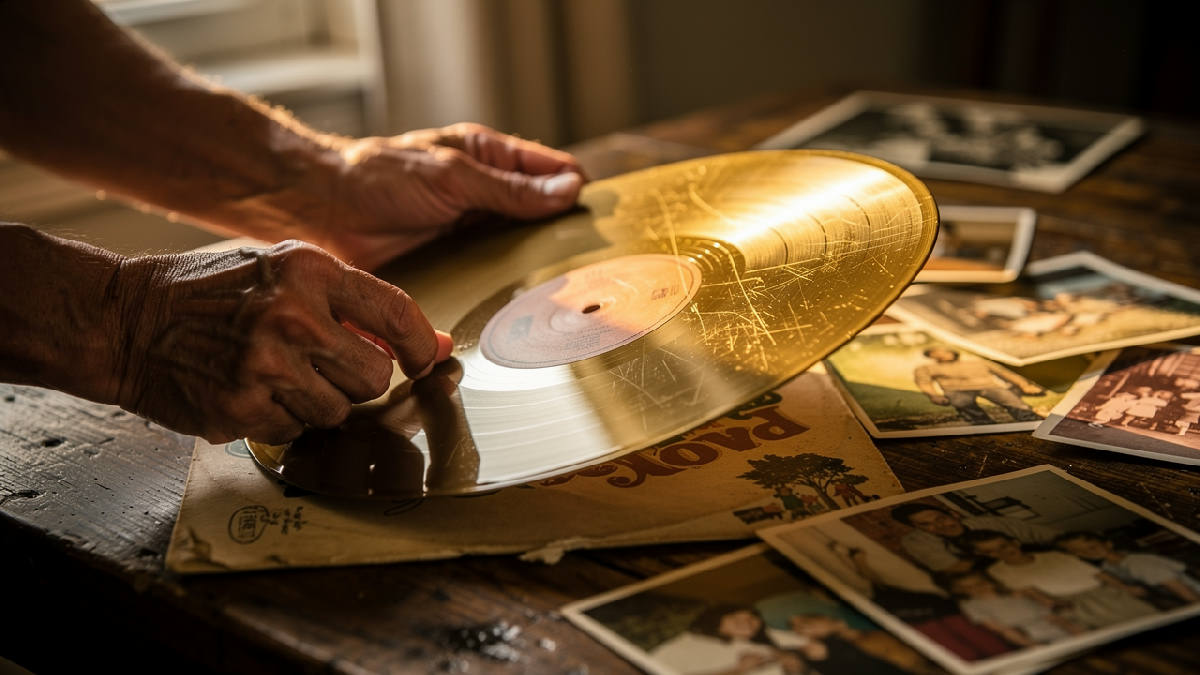
In the summer of 1977, a small team led by astronomer Carl Sagan had a strange assignment: decide what represents being human, then put it on a record, bolt it to a spacecraft, and send it past the edge of the solar system. **They had one shot. There would be no second disc, no update, no chance to add something they forgot.**
So they chose carefully. Greetings in 55 languages. A baby's cry. A mother's first words to her newborn. The sound of a kiss. Ninety minutes of music from across the world. And then, at the suggestion of the project's creative director, Ann Druyan, something no one had planned for: her own heartbeat and brainwaves, recorded on a borrowed hospital machine two days after she and Sagan privately agreed to marry, while she thought about their love and the whole history of the species that made the record.
1. They understood something most of us forget
NASA did not send data into space. A spacecraft full of numbers would have said nothing about what it was actually like to be alive. **They sent a voice, a heartbeat, a kiss, because those are the things that prove a life happened, not just that it existed.**
That is the same instinct behind every kept voicemail, every recorded bedtime story, every home video no one has watched in years but no one will delete. The instinct is correct. The problem most families have is not caring. It is that no one presses record before the moment passes.
Facts describe a life. A voice, a story, a heartbeat, proves it was lived.
2. It is still out there, and it is still the longest message anyone has ever sent
Voyager 1, the spacecraft carrying that record, is now more than 15 billion miles from Earth, in interstellar space, past the edge of the Sun's own influence. In November 2026, it will cross a distance so vast that a radio signal traveling at the speed of light needs a full day to arrive: the first human-made object ever to reach it.
**Forty-nine years later, the record is still the farthest a message from an ordinary human life has ever traveled.** Not a monument. Not a headline. A kiss, a heartbeat, a greeting in a language most people alive have never heard, still moving outward, long after everyone who made it is gone.
The record that has traveled farthest into the universe is not made of achievements. It is made of ordinary human moments someone chose to keep.
3. You do not need a spacecraft to do what Ann Druyan did
Druyan did not wait for the perfect, polished version of herself. She recorded her own heartbeat, unscripted, thinking about love and mortality and everything in between, because she understood that a message meant to outlast you has to be honest, not perfect.
**With LifeScribe, Ari asks the questions that get someone talking the way Druyan talked: about the people they loved, the moments that mattered, the things they would want remembered.** The conversation becomes a keepsake your family can return to, long after the moment it was recorded in has passed.
You will never launch a spacecraft. You can still make something that outlasts the moment it was made in.
I used to think I'd get around to recording my dad's stories someday. Reading about a record that has survived 49 years in space, made by people who understood you do not get a second try, is what finally got me to press record this week.Marcus, 46, recording his father's stories over a Sunday call
What you get with LifeScribe
- Ari asks the kind of questions that get someone talking honestly about the people and moments that shaped their life.
- No studio, no hospital brainwave machine, no spacecraft required: the same instinct that built the Golden Record works on a phone call you already have planned.
- Every conversation becomes a keepsake your family can return to, not a memory that only exists in someone's head.
- Built on the same idea NASA bet a spacecraft on: a voice and a heartbeat outlast a list of facts.
Start free, with nothing to lose
Try it on a call you already have planned this week, free. There is nothing to install and nothing to learn. If turning an ordinary conversation into something that lasts does not feel worth it, you have lost nothing but a few minutes.
**NASA had exactly one shot to decide what was worth keeping, and they chose voices over facts.** Most families get more than one shot, and still let the moment pass. The stories your family could keep right now will not wait 49 years the way a spacecraft can.
You do not need a spacecraft. You need to press record.
Pick a call you already have planned this week. Ask one real question, and this time, keep the answer.
Questions grandparents ask us
Is this a real NASA project, or exaggerated for this post?
It is real. The Voyager Golden Record was created in 1977 under the direction of astronomer Carl Sagan, with a team that included Ann Druyan, Frank Drake, Linda Salzman, Jon Lomberg, producer Timothy Ferris, and sound engineer Jimmy Iovine. A copy was attached to each of the two Voyager spacecraft.
Did Ann Druyan really record her own brainwaves?
Yes. At her own suggestion, an hour of Druyan's brainwaves and heartbeat were recorded on an EEG machine, compressed to about one minute, and included on the record. She has said she was thinking about the history and struggles of humanity, and about falling in love with Sagan, who she had agreed to marry only two days earlier.
How far away is the record actually now?
Voyager 1, which carries the record, is more than 15 billion miles (about 167 astronomical units) from Earth and is the most distant human-made object in existence. In November 2026, NASA expects it to become the first human-made object to reach one light-day from Earth, a distance a radio signal takes a full 24 hours to cross.
What else is on the record?
118 photographs of Earth and human life, about 90 minutes of music from cultures around the world, an audio essay called 'The Sounds of Earth' (footsteps, a kiss, a baby's cry, a mother's first words to her newborn, among others), and spoken greetings in 55 languages plus one from a humpback whale.
What does this have to do with recording my own family?
The team behind the record made a deliberate choice: represent humanity with real voices and real moments, not just facts and achievements. LifeScribe exists on the same premise. Ari asks the questions that turn an ordinary conversation into something worth keeping, long before anyone is thinking about a spacecraft or a deadline.
https://getlifescribeapp.com/blog/the-golden-record-nasa-built-so-humanity-would-not-be-forgotten