Researchers gave the same family memory to the person who lived it and the person who only ever heard it told. The person who heard it remembered something warmer, and something smaller.
Researchers Compared the Same Family Memory From Both Sides. The Person Who Only Heard It Remembered It Warmer Than the Person Who Lived It.
In a 2026 study published in the journal Memory, researchers David Baudet, Christine Bastin, Olivier Luminet, and Aline Cordonnier ran three studies comparing parents and grandparents, the transmitters who lived a family memory, against children and grandchildren, the receivers who only ever heard it told. The story that reached the next generation was not a weaker copy of the original. It was a different memory altogether, and a kinder one.
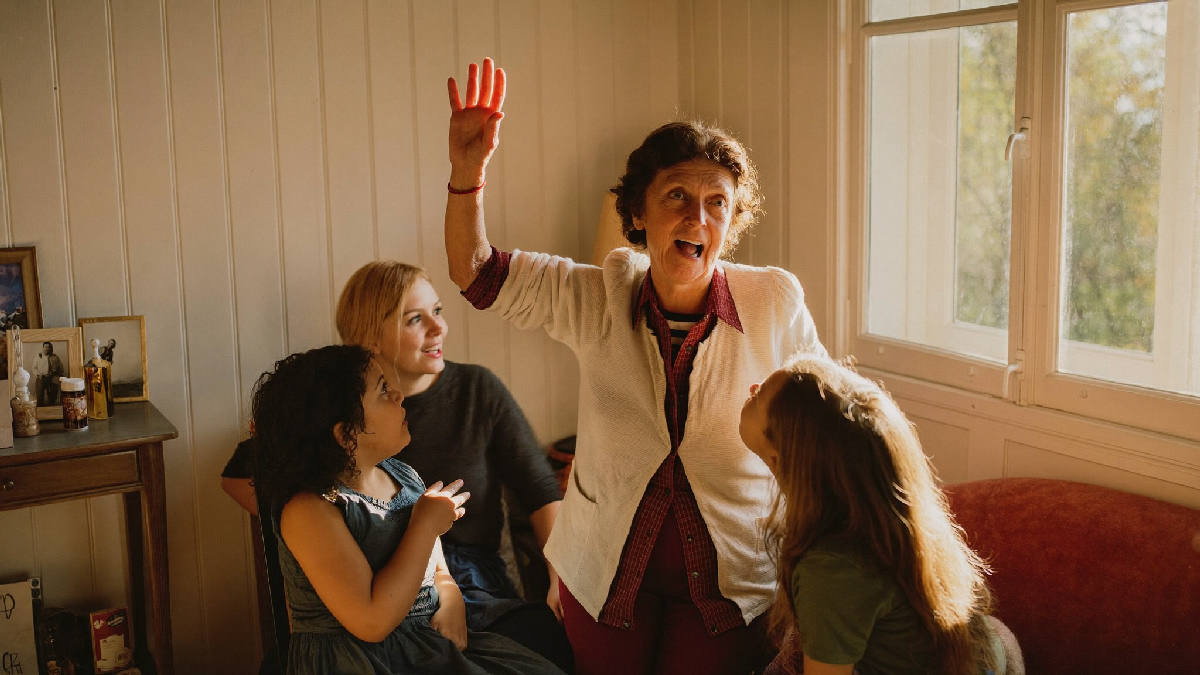
The researchers called the storytellers **transmitters** and the listeners **receivers**, and the first result was the expected one: **the people who actually lived a memory reported feeling it more intensely than the people who only ever heard about it.** A lived experience simply hits harder than a story told secondhand, however many times you have heard it.
The second result is the one worth sitting with. **Grandparents' stories came out less negative than parents' stories, and grandchildren remembered grandparents' stories with more admiration, more happiness, more pride, and more respect than children remembered the same kind of story from a parent.** The farther a memory travels down the family line, the warmer it seems to land.
That is not the story getting more accurate. **It is the story getting edited, one generation at a time, into a version that is easier to admire and further from what it actually felt like to live through.**
1. The person who lived it feels it. The person who heard it remembers something else.
Across three studies, transmitters, the parents and grandparents who actually experienced the memory, consistently reported more intense emotion than receivers, the children and grandchildren who only heard it told. **That gap is not surprising on its own: living through something and hearing about it are simply different experiences.**
What is surprising is what receivers were left holding instead. **They were not left with a fainter copy of the same feeling. They were left with a different one, often a warmer, more admiring version of a memory that, for the person who lived it, may have been far more complicated.**
A memory told secondhand is not a smaller version of the real one. It is a different memory, built by whoever is listening.
2. The farther back the story comes from, the better it sounds
The researchers found a clear generational pattern. **Grandparents' stories were rated less negative than parents' stories, and grandchildren recalled grandparents' stories with more admiration, happiness, pride, and respect than children recalled the same kind of story from a parent.**
Every extra generation of distance seems to soften a memory's rough edges and sharpen its best parts. **A hard year quietly becomes a character-building one. A close call becomes a good story. By the time a memory reaches the grandchildren, it has been rewritten into something easier to be proud of.**
Two generations is often all it takes for a hard memory to be remembered as an inspiring one.
3. The real version only exists while the person who lived it can still tell it
None of this makes family stories less valuable. **It means the version that survives is not the version that was lived, and the only way to keep the real one, intensity and complications included, is to get it directly from the person who was actually there.**
Waiting for a grandchild to inherit the polished version, secondhand, is not really keeping the story. **It is keeping the story after it has already been quietly rewritten by everyone who told it in between.**
The real memory belongs to the person who lived it. Ari's calls are built to catch it before it becomes someone else's nicer version.
My mom always told us her father's stories about leaving Cuba like they were almost an adventure. When I finally got my grandfather on a call with Ari and just listened to him tell it himself, it was so much harder, and so much more him, than the version I grew up on.Daniela, 41, recording her grandfather's stories on Ari
What you get with LifeScribe
- A 2026 study in the journal Memory ran three studies comparing parents and grandparents (the people who lived a family memory) against children and grandchildren (the people who only heard it told).
- The people who lived a memory reported feeling it more intensely. The people who only heard it remembered a warmer, more admiring version, especially once the story had passed through two generations.
- Grandparents' stories came out less negative than parents' stories, and grandchildren recalled them with more admiration, happiness, pride, and respect than children recalled a parent's story.
- Built on documented research: Baudet, Bastin, Luminet, and Cordonnier, 2026, Memory.
Start free, with nothing to lose
Call a parent or grandparent this week and ask them to tell you, in their own words, about something you have only ever heard the family's polished version of. Free. If what they say sounds nothing like the story you grew up on, you have found exactly what this research says you would.
**A story that only survives secondhand keeps getting rewritten by whoever tells it next.** The version with the real intensity, the real complications, the real person in it, only exists for as long as the person who lived it can still tell it themselves. Once they are gone, the family is left with whatever warmer, thinner version made it through.
Do not settle for the version that got passed down. Get the one that was actually lived.
Ari calls and asks the kind of question that gets the real story, from the person who was actually there, before it becomes someone else's nicer memory of it.
Questions grandparents ask us
What did the study actually compare?
A 2026 study in the journal Memory, by David Baudet, Christine Bastin, Olivier Luminet, and Aline Cordonnier, ran three studies comparing transmitters (parents and grandparents who lived a family memory) with receivers (children and grandchildren who only heard it told), looking at how emotionally intense the memory felt to each side.
Who felt the memory more strongly?
The transmitters, the people who actually lived the memory, consistently reported higher emotional intensity than the receivers who only heard it told.
Does a family story get less accurate with each generation?
The study found that grandparents' stories came out less negative than parents' stories, and grandchildren recalled grandparents' stories with more admiration, happiness, pride, and respect than children recalled a parent's story. Each generation of distance appears to soften and idealize the memory a little more.
Is a warmer memory a bad thing?
Not necessarily, but it is a different memory from the one that was actually lived. The complications and the real emotional weight belong to the person who experienced it, and those details are what tend to fade first as a story is retold.
What is the practical takeaway for families?
The only way to keep the real version of a family memory, not the warmer one that survives retelling, is to hear it directly from the person who lived it, in their own words, while they can still tell it.