You have probably noticed this without ever naming it: a face is easy to picture, a room is easy to describe, but a voice is hard to hold onto once it is gone. Scientists at the University of Iowa tested exactly this, and found your ears really are the weak link.
Scientists Tested How Well You Remember What You Hear, See, and Touch. Sound Lost, and It Was Not Close.
In 2014, researchers James Bigelow and Amy Poremba asked more than 100 people to remember sounds, images, and textures, then tested them seconds, hours, and days later. Memory for sound broke down first and fastest every time, while memory for sight and touch held up about the same. It is one of the clearest explanations yet for why a recorded voice matters more than most people realize.
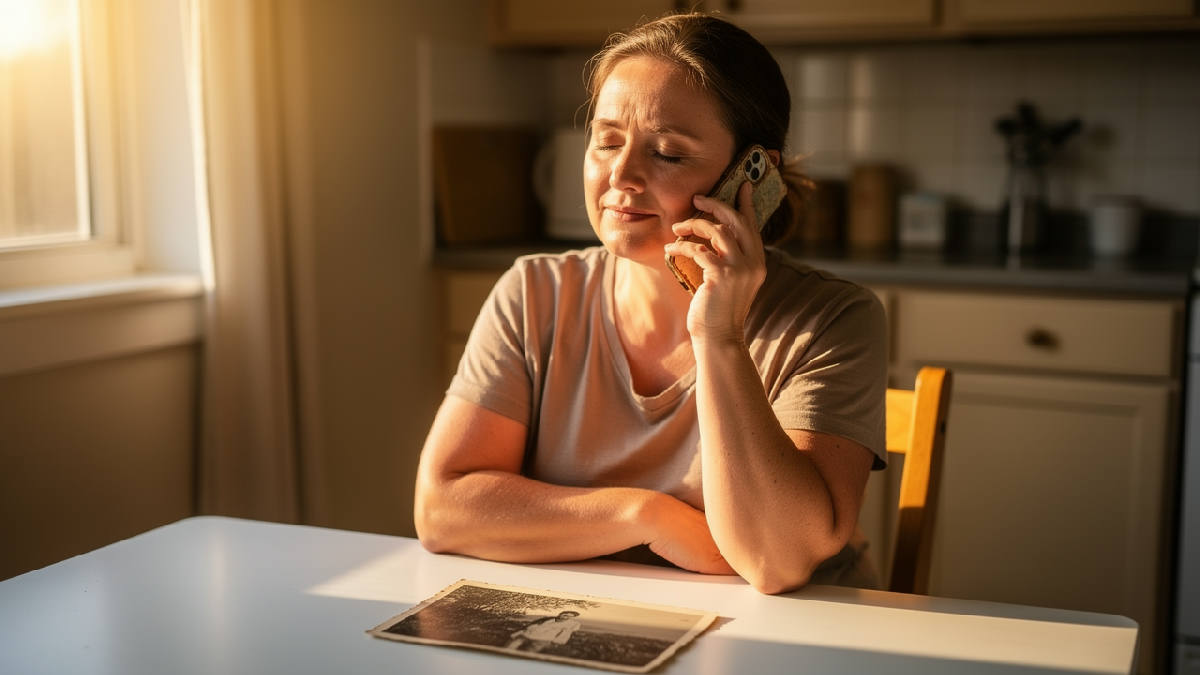
Ask someone to describe a person they have lost, and the face usually comes easily: the shape of their smile, the color of their eyes, the way they stood in a doorway. **Ask them to describe the sound of that person's voice, and something different happens. It is harder to summon, and it fades faster, until eventually it will not come at all.** For a long time this felt like an ordinary, unexplained sadness. In 2014, a study gave it a mechanism.
Researchers James Bigelow and Amy Poremba at the University of Iowa set out to test something simple: how well do people actually remember what they hear, compared with what they see and touch? **They had more than 100 people listen to tones, look at colors, and feel vibrations, then tested their memory again after delays ranging from a single second to a full week.** The results, published in the journal PLOS ONE, were not close.
**Memory for sound began breaking down within four to eight seconds, far sooner and far more sharply than memory for what people had seen or felt.** A week later, people were still reliably recalling images and textures at about the same rate, the first study to show that touch and sight hold up almost equally well in human subjects. Sound, on the other hand, had already fallen far behind. Of the three senses tested, hearing was, by a wide margin, the one memory trusted least.
1. The ear forgets first, and it is not close
The first experiment tested short-term memory. Participants listened to pure tones, looked at shades of red, and felt vibrations through a small bar, then were asked seconds later whether a new stimulus matched the original. **Memory for sound started to slip within four to eight seconds, while memory for the images and textures stayed accurate far longer.** No comparable decline showed up for sight or touch in that same window.
The second experiment pushed the timeline out to a full week, using everyday sounds and images instead of lab tones: barking dogs, a silent basketball game, an ordinary object like a coffee mug. **The pattern held. People remembered what they had seen and what they had touched about equally well, even after seven days. What they had heard, they remembered clearly worse.**
Across two separate experiments and a full week of testing, the ear lost every time.
2. Why the voice is the memory that goes first
This is not just a curiosity about tones and vibrations in a lab. **Of everything a person leaves behind, a voice is the one thing that exists only as sound. A photograph keeps a face. A letter keeps handwriting. Nothing but a recording keeps the exact way someone actually sounded when they said your name or told a story.**
That is likely part of why so many people describe, quietly and almost apologetically, a fear of forgetting how someone sounded. **It is not a failure of love or attention. It is the shape of memory itself, built to hold onto a face or a touch longer than it holds onto a sound.** The study did not set out to explain grief. It ended up explaining a very specific and very common kind of it.
A voice is the one part of a person that memory is built to lose first.
3. The one thing this study cannot fix on its own
Knowing why a memory fades does not make it fade any slower. **The only real defense against a memory built to let go of sound is not to rely on memory for it at all.** A recording does not care how many seconds or weeks have passed.
With LifeScribe, Ari turns an ordinary phone call into a real recording, kept in someone's own voice, telling their own stories. **You cannot train your memory to hold onto a sound the way it holds onto a face. You can just keep the sound itself, before it becomes the thing you are straining to remember.**
You cannot out-remember your own ears. You can just keep the recording.
I can still see my grandfather's face perfectly, but for years I could not hear his voice in my head anymore, and it scared me. I called him and just let Ari record him telling the same fishing story he always tells. Now I do not have to try to remember how he sounded. I can just listen.Maya, 29, calling her grandfather on a Tuesday evening
What you get with LifeScribe
- A 2014 study by James Bigelow and Amy Poremba at the University of Iowa, published in PLOS ONE, found memory for sound begins fading within four to eight seconds, far sooner than memory for sight or touch.
- A week later, memory for sound was still measurably worse, while memory for what people had seen and what they had touched held up about equally, the first study to show that parity in human subjects.
- Ari helps you keep the one part of a person that memory is least equipped to hold onto: the actual sound of their voice.
- Built on documented, peer reviewed research published in PLOS ONE.
Start free, with nothing to lose
Start with one ordinary call to someone whose voice you want to keep, free. Nothing to install, nothing to schedule around. If it does not feel like it kept something worth keeping, you have lost nothing but a few minutes of a call you were glad to make anyway.
**Memory for sound starts slipping within seconds, and it never catches back up to memory for a face or a touch.** That is not something willpower fixes. The only way to keep how someone actually sounds is to keep the sound itself, while you still can.
You will forget how they sound before you forget how they look. Keep the sound while you still have it.
Let Ari turn an ordinary phone call into a real recording, kept in their own voice, telling their own stories.
Questions grandparents ask us
What did the University of Iowa study actually find?
Researchers James Bigelow and Amy Poremba tested more than 100 people's memory for sounds, images, and textures. Memory for sound began declining within four to eight seconds and stayed measurably worse than memory for sight or touch even a full week later, while memory for images and textures held up about equally well.
Where was this study published?
The findings were published in the journal PLOS ONE in February 2014, and were the first study to show that human memory for touch is roughly as strong as memory for sight, a parity that memory for sound did not share.
Does this mean people naturally forget voices faster than faces?
The study tested tones, everyday sounds, images, and textures rather than voices specifically, but it points at the same mechanism many people describe anecdotally: sound is the sense human memory is least equipped to hold onto over time, and a voice exists only as sound.
What can someone actually do about it?
Since the underlying memory system does not change, the more reliable approach is to keep an actual recording of a voice rather than rely on memory alone. Ari helps by turning an ordinary phone call into a kept recording of someone telling their own stories, in their own voice.