Fourteen adults sat for interviews that ran up to three and a half hours, all circling the same thing: the name they were given, and the relative who died before they ever met.
Researchers Interviewed 14 People Who Were Named After a Relative Who Had Already Died. One Told Them: 'I'm a Memorial Site.'
In a 2026 study in the journal Family Process, researchers Sigal Shorer and Michal Mahat-Shamir interviewed adults named after a deceased relative and found that a name can carry a lifelong bond, and sometimes a lifelong weight, whether the person asked for it or not.
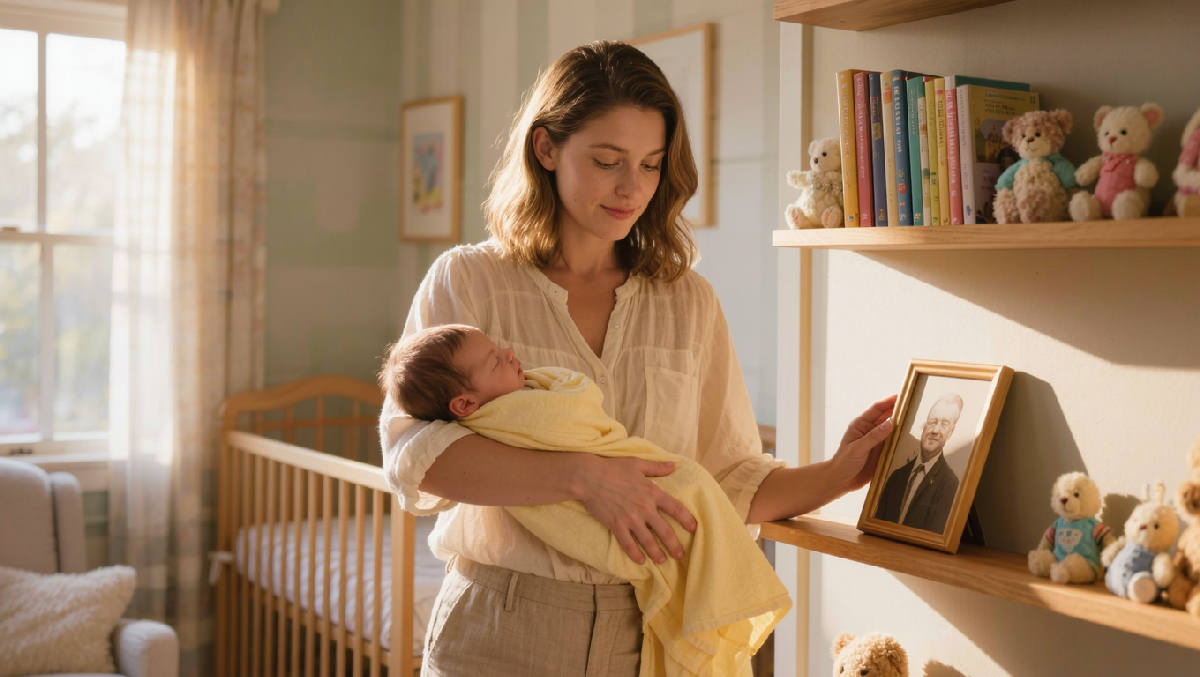
In many families, a new baby is given the name of someone who is already gone: a grandfather, an aunt, a sibling who died young. The tradition is meant as an honor. Nobody asks the baby how the name feels to carry.
So researchers asked the adults that baby grew into. Fourteen people, average age 38, sat for long, unhurried interviews about the name they had lived inside their whole lives. **Every one of them felt bound to a person they had never met. Not one of them felt neutral about it.**
The interviews surfaced two things happening at once: a name that connects, and a name that can weigh.
1. A name can be a bond you never agreed to
For some participants, carrying a dead relative's name felt like an honor freely given and gladly accepted, a thread stretched across a family that would otherwise have snapped. **'When someone decides to name a person after someone else, they form a bond between three parties,' one participant, Shira, 32, explained** describing herself, the relative she was named for, and the parent who chose the name as three points connected by one decision.
Researchers call this continuing bonds: an ongoing relationship with someone who died, kept alive through ritual, memory, or in this case, a name spoken out loud every single day of a life the deceased never got to see.
A name given after death is not a full stop. For some, it is the start of a relationship with someone they never got to meet.
2. For others, the same name became a weight to carry
Other participants described the identical tradition very differently. **'Being named after someone is problematic because they carry a burden throughout their life,' said David, 42**, describing years of feeling less like himself and more like a stand-in for somebody else's grief.
The researchers frame this as a continuum, not two separate groups: **identification on one end, detachment on the other**, and most participants living somewhere between the two, some days closer to pride, some days closer to strain. One participant put the feeling as plainly as it can be put: **'I'm a memorial site, a living memory of something deeply meaningful to them,' said Ezra, 40**, describing what it is to carry his late uncle's name.
The exact same tradition produced pride in one person and identity strain in another, sometimes inside the same family.
3. The name is not optional. What comes with it can be.
This study cannot tell us why the same tradition landed so differently from person to person. It did not test what each family did or did not explain about the person behind the name. What it does say, in its own conclusion, is where the answer probably lives: **researchers are urging families to treat a naming history as part of the family's story, something told and revisited, not a fact mentioned once at a birth and then left alone.**
A name by itself is three or four syllables. **A name paired with the actual story of the person, who they were, what they loved, how they laughed, is no longer a burden with no context. It is a relationship with somewhere to start.**
Nobody gets to choose the name they're given. Whether that name comes with a story is still very much up to the family holding it.
My son is named after my grandfather, and for years that name was really just three syllables and one black-and-white photo on the hallway wall. Then I found the recordings I made with Ari before Grandpa passed. Now when my son asks who he's named after, I don't just explain it. I play him Grandpa's own voice, telling his own stories, in his own words.Marcus, 41, recording his grandfather's stories on Ari
What you get with LifeScribe
- A 2026 study in Family Process interviewed 14 adults, average age 38, all carrying the name of a relative who died before them.
- Every participant felt some kind of bond to the person they were named for. Not every participant felt free inside that bond.
- One participant described it in four words that stuck with researchers: 'I'm a memorial site.'
- Built on documented research: Shorer and Mahat-Shamir, Family Process, 2026.
Start free, with nothing to lose
Call the person whose name might end up on someone in your family someday. Just a phone call, free. Ari asks who they are, what they lived, what they loved, so the name that gets passed down someday carries a story with it, not just a guess.
A commemorative name outlives the person who chose it, and it outlives the reasons behind it too, if nobody ever tells the story. Fourteen adults in this study carried a name for decades, some with pride, some with a weight they struggled to put into words. The difference was never the name itself. It was whether anyone ever sat down and told them who they were actually named for.
Don't just pass down a name. Pass down who they were.
Ari calls and asks the questions, so the person behind the name gets remembered as more than a name on a birth certificate.
Questions grandparents ask us
What did the study actually find?
A 2026 study in the journal Family Process, by researchers Sigal Shorer and Michal Mahat-Shamir, interviewed 14 adults named after a relative who died before them. Every participant felt some form of bond to that relative, but the feeling ranged widely, from pride and connection to emotional burden and identity conflict.
How was the study done?
Researchers conducted in-depth interviews, 1.75 to 3.5 hours each, with 14 Israeli adults with an average age of 38.2, using interpretative phenomenological analysis to understand their lived experience of carrying a commemorative name.
Did everyone feel the same way about their name?
No. Researchers describe a continuum between identification and detachment. Some participants felt proud and connected to the relative they were named for. Others described real identity strain, calling the name a burden they carried without ever agreeing to it.
Is this specific to one culture or naming tradition?
The interviewees were Israeli adults from Ashkenazi and North African Jewish backgrounds, where naming a child after a deceased relative is a longstanding tradition. The researchers frame the pattern around continuing bonds theory, a broader idea about staying connected to someone who died, which is not specific to any one culture.
What's the practical takeaway for families?
Researchers encourage families to treat a commemorative name as part of an ongoing family story, not a one-time decision, and to make sure the person carrying the name actually knows who they were named for, not just the name itself.