A smell can drop you back into a kitchen you have not stood in for forty years, faster and harder than any photograph ever could. Researchers wanted to know if that feeling was real, or just a nice way of putting it.
Scientists Compared Memories Triggered by Smell, Photos, and Words. Only One Pulled People All the Way Back to Childhood.
Johan Willander and Maria Larsson, at Lund University, gave 93 older adults one of three cues, a word, a picture, or an odor, and asked each person to describe any memory it brought back. Published in 2006 in Psychonomic Bulletin and Review, the result was not close: only the odor cues reliably reached back to childhood.
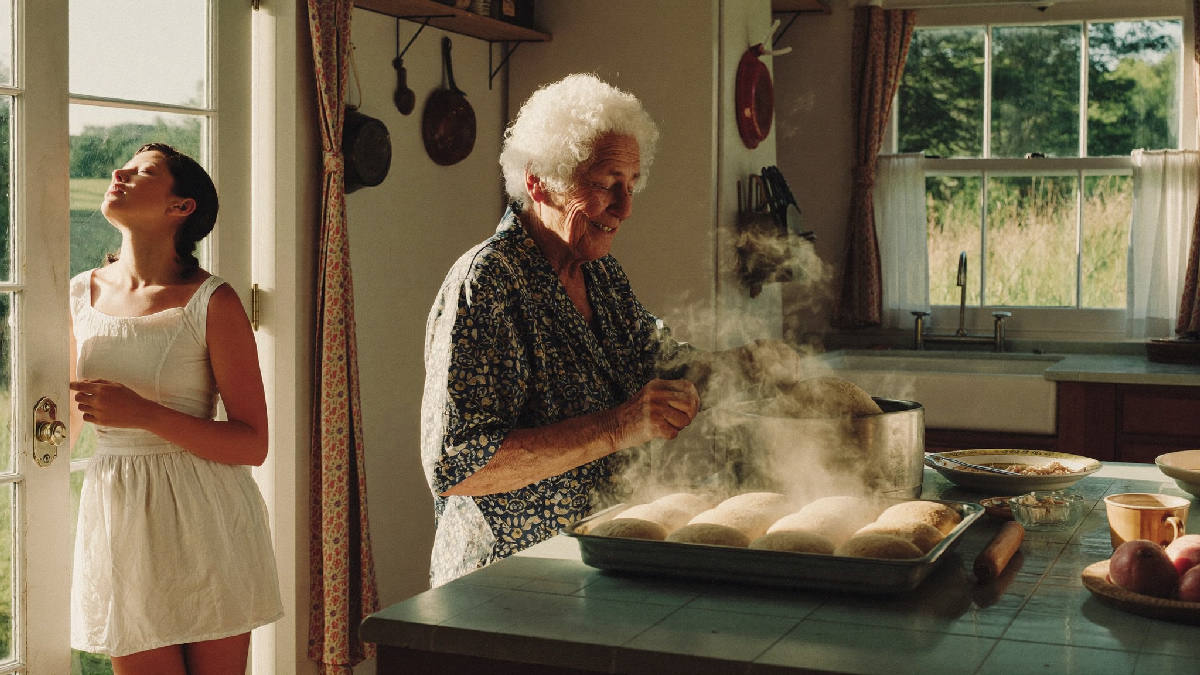
Ask someone to remember something, and you usually hand them a word or a photo. That is how most memory research works, and it is how most families try to hold onto the past too: a name, an old picture pulled out at a holiday table. **Willander and Larsson wanted to know if that was even the right tool for the job.**
So they ran a simple, almost old-fashioned experiment. Ninety-three older adults each received one of three kinds of cue, a word like "soap" or "pine," a picture of the same thing, or the actual smell of it. Then they were asked to describe whatever autobiographical memory came to mind. **Nobody was told what the study was about. They just had to say what they remembered, and when.**
The word- and picture-cued memories landed all over people's lives, spread fairly evenly across the decades. **The odor-cued memories did something different. They clustered hard around early childhood, well before age ten, and they came with a feeling the other two cues rarely produced: the sense of being pulled back in time, not just reminded of it.**
1. The same cue, three ways
The clever part of the design was that the underlying thing being cued did not change. Soap was soap, pine was pine, whether it arrived as a word on a card, a photograph, or a scent sample. **The only thing the researchers varied was which sense carried it in.**
That control is what makes the finding hard to explain away. It was not that odors happen to be tied to more childhood objects than words or pictures are. **It was that the exact same trigger, delivered through the nose instead of the eyes or the ear, pulled from a measurably earlier and more emotional layer of memory.**
Same object, same person, same memory waiting to be found. Only the sense used to knock on the door changed.
2. Why smell gets a shortcut
There is a physical reason this keeps showing up in the research, not just here but across decades of work, much of it from psychologist Rachel Herz. **Smell is the only sense with a direct line to the amygdala, the brain's emotional hub, before the signal ever passes through the thalamus the way sight and hearing do.** Sight and sound get filtered on the way in. Smell does not.
That shortcut is old enough to have a literary name. In 1913, Marcel Proust described the taste and smell of a madeleine dipped in tea unlocking a childhood he thought he had lost. **Scientists still call the effect the Proust phenomenon, and a century of research keeps landing on the same thing he noticed by accident: the memory a smell brings back is not just older, it feels more like being there again.**
A photograph reminds you. A smell can make you feel like you never left.
3. The memory nobody thought to ask about
Here is the uncomfortable part. **Most families do not build their storytelling around smell, because you cannot text a smell to someone, or paste it into a photo album.** So the memories most likely to surface whole, the ones with the earliest roots and the strongest pull, are often the ones nobody ever gets around to asking about.
A phone call cannot carry a scent either. **What it can carry is the question a photo album never asks: what did your grandmother's kitchen smell like, and what happened there?** With LifeScribe, Ari calls and asks a real question, one at a time, so the memory a smell would have unlocked gets a chance to come out anyway, in someone's own words, while they are still the one who can tell it.
You cannot mail a smell to your grandchildren. You can still get the story it would have told.
My dad can't describe most of his childhood in order, dates and places get jumbled. But ask him about the smell of his father's workshop and he talks for twenty minutes straight, details I had never heard once in thirty years. Ari asked him that on a call last month and I finally have it saved.Marcus, 39, recording his father's stories on Ari
What you get with LifeScribe
- A 2006 Lund University study found odor-cued memories reached back to early childhood far more reliably than the same cue given as a word or a picture, and felt more emotionally real when they did.
- The effect has a name, the Proust phenomenon, and a physical explanation: smell is the one sense wired directly to the brain's emotional center.
- Ari calls and asks a real question, so the memories nobody thought to ask about get a chance to surface anyway, in someone's own words.
- Built on documented research: Willander and Larsson, 2006, Psychonomic Bulletin and Review, and decades of odor-memory research from Rachel Herz.
Start free, with nothing to lose
Try it on your next call with a parent or grandparent, free. Nothing to install, nothing to schedule around. If it does not surface something you had never heard before, you have lost nothing but a few minutes of a call you could be having anyway.
**The memory does not wait for the right prompt.** A smell can unlock forty years in an instant, but only if someone is there to hear what comes out. Once that person is gone, the door the smell would have opened stays shut for good.
Do not let the deepest memories stay buried because nobody asked the right question.
Ari calls and asks a real question, so the story underneath the smell, the one nobody thought to ask about, gets the chance to be told and kept.
Questions grandparents ask us
What did the study actually find?
Willander and Larsson (2006, Psychonomic Bulletin and Review) gave 93 older adults a word, a picture, or an odor cue and asked them to describe any memory it triggered. Memories triggered by odor cues clustered significantly earlier in life, concentrated in early childhood, than memories triggered by the same cue given as a word or a picture.
Why does smell trigger older, more emotional memories?
The olfactory system has a direct anatomical connection to the amygdala, the brain region most involved in emotion, before the signal passes through the thalamus the way visual and auditory information does. Researcher Rachel Herz's work has repeatedly found that the same cue delivered as a smell produces a more emotional memory response than the identical cue delivered as a word or picture.
What is the Proust phenomenon?
It is the name scientists use for odor-evoked autobiographical memory, after the passage in Marcel Proust's 1913 novel Swann's Way in which the smell and taste of a madeleine dipped in tea unlocks a forgotten childhood memory for the narrator.
Does this mean photos and stories told out loud matter less?
No. It means one whole category of memory, the kind unlocked by smell, rarely gets asked about because nobody can hand someone a scent the way they hand over a photo. Those memories are still there and still worth asking for, just through conversation rather than an object.
Why does this matter for recording a family member's story?
If the earliest, most emotional memories are the ones smell reaches and photos and small talk rarely do, then a real conversation, the kind a phone call can hold, is one of the few ways left to reach them before they are lost.