Researchers recorded 30 seconds of ordinary life, again and again, for four days.
Researchers Recorded Strangers' Days for a Week. The Happiest People Had Twice as Many Deep Conversations and a Third as Much Small Talk.
In a 2010 study in Psychological Science, Matthias Mehl and colleagues found that the happiest people spent more of their talking time on conversations that mattered.
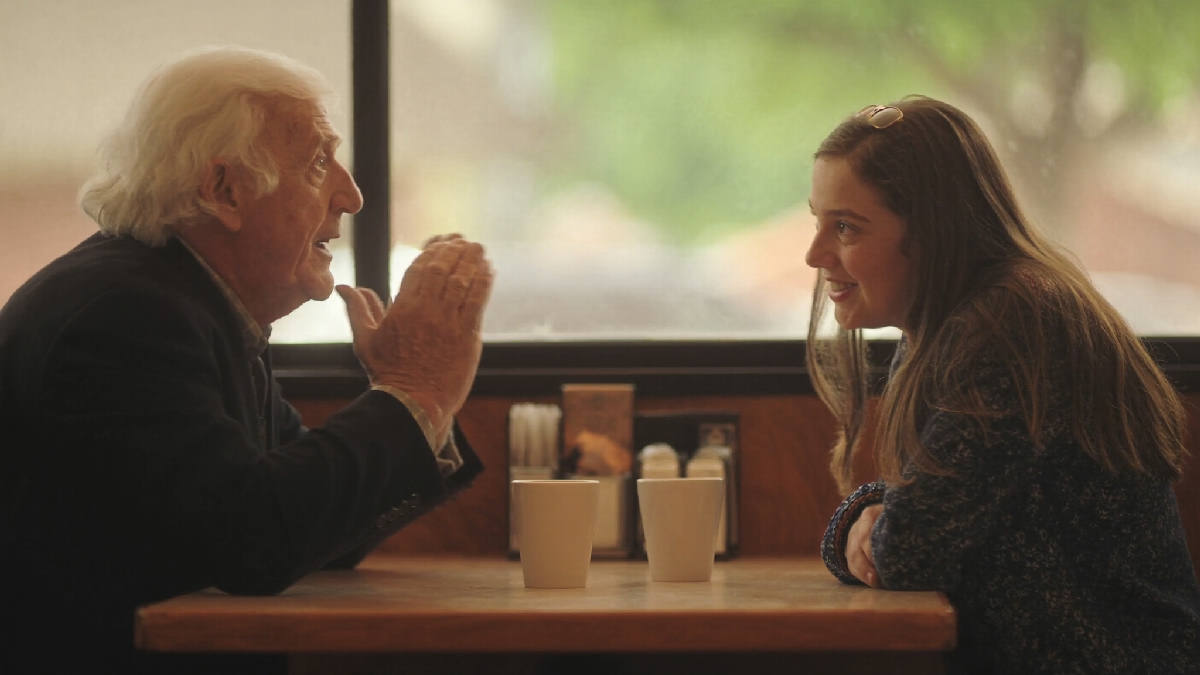
Most of us assume happiness comes from what happens to us. But a small, clever study asked a quieter question: **what are happy people actually doing with their day?**
The answer was not a vacation or a promotion. It was **how they talked,** and who they talked with, in the most ordinary moments.
The study measured college students, not families, and it could not prove cause. Still, it points at something worth holding onto: **the conversations that matter are the ones worth keeping.**
1. They listened in on real life, 30 seconds at a time
The team had **79 college students** wear a small recorder for four days. It switched on automatically for **30 seconds every 12.5 minutes,** which added up to **23,689 recordings** of everyday life.
Researchers then listened and noted whether each person was alone or talking, and whether the talk was **small talk** (trivial and banal) or a **substantive conversation** (meaningful information being shared).
No staged interviews. Just the real sound of an ordinary week.
2. The happiest people spent less time alone and more time in real conversation
Comparing the happiest participants with the unhappiest, the gap was clear. The happiest spent **about 59 percent of their time alone, against 77 percent** for the unhappiest.
And when they talked, **46 percent of their conversations were substantive, against 22 percent.** Small talk made up **10 percent of the happiest people's conversations, against 28 percent** for the unhappiest.
The happiest people did not talk more about nothing. They talked more about something.
3. Here is the honest part: it was a snapshot, and one piece did not hold up
The authors say plainly that the findings are **correlational.** Happy people may simply start deeper conversations, or deeper conversations may lift people up. The study cannot tell which.
In 2018, a larger replication led by Anna Milek pooled the original sample with several adult samples. It confirmed that **life satisfaction went with more time in conversation and more substantive talk,** but it found **no reliable link with small talk.**
So the lasting lesson is not to avoid small talk. It is that **a real conversation, one where something meaningful gets said, is the part that seems to count.**
Deep conversation held up. The small talk story did not.
The happiest participants spent less time alone and had more substantive conversations, and fewer trivial ones.Mehl, Vazire, Holleran, and Clark (2010), Psychological Science
What you get with LifeScribe
- A 2010 study recorded 79 college students for four days, capturing 23,689 short clips of everyday life.
- The happiest participants were alone less and had a higher share of substantive conversations than the unhappiest.
- A 2018 pooled replication confirmed the link with substantive conversation, but not the link with small talk.
- The study was correlational and measured students, not families, so this page makes no claim that conversations cause happiness.
- Built on documented research: Mehl et al., Psychological Science, 21(4), 539 to 541, 2010, and Milek et al., Psychological Science, 29(9), 1451 to 1462, 2018.
Start free, with nothing to lose
Just a phone call, free. Ari listens, asks about your life, and keeps your stories in your own voice for the people you love.
The conversations that matter rarely get planned, and they are easy to let slide. A real story, told once and kept in their own voice, is something the people you love can come back to. It is just a phone call.
Turn a good conversation into a story worth keeping.
Ari calls, listens, asks what comes next, and keeps your stories in your own voice for the people you love.
Questions grandparents ask us
What did the study actually find?
In a 2010 study of 79 college students, the happiest participants spent less time alone and a higher share of their conversations on substantive topics, with a lower share on small talk, than the unhappiest participants.
Who ran it?
Matthias Mehl, Simine Vazire, Shannon Holleran and C. Shelby Clark, published in Psychological Science, volume 21, issue 4, pages 539 to 541. The 2018 replication was led by Anna Milek, with Mehl among the authors.
How was it measured?
Participants wore a recorder that captured 30 seconds of sound every 12.5 minutes for four days. Trained coders judged whether each clip was alone time, small talk or a substantive conversation.
Did the replication confirm everything?
No. It confirmed the associations with time spent in conversation and with substantive conversations, but found no reliable association with small talk.
Does it say anything about families or recording stories?
No. It measured students' everyday conversations. It did not test families, storytelling, recording or any product, and it could not show that conversation causes happiness, so this page makes no claim about them.
https://getlifescribeapp.com/blog/the-conversations-that-counted