Researchers checked in on adults at random moments of an ordinary day.
Researchers Checked In on Nearly 3,900 Adults at Random Moments of the Day. Older Adults Thought About the Past Less Often, but the Memories They Had Were More Detailed.
In a 2026 study in PNAS, Vannia Puig Rivera, Jessica Andrews-Hanna and colleagues found that older adults' everyday memories were more detailed than a lab test suggested.
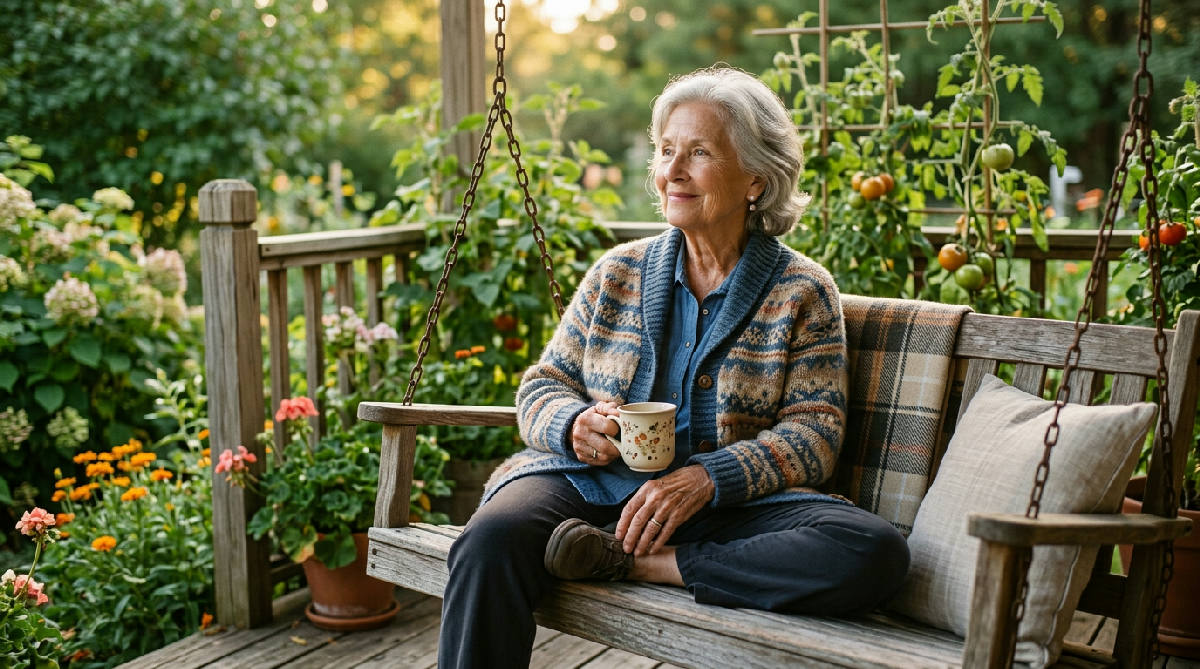
We tend to assume memory only fades. Lab tests say older adults recall fewer details of the past, and that is where the story usually ends.
But what happens in a normal day, with no test and no stopwatch? Researchers asked thousands of people **what they were thinking about at random moments,** and the answer surprised them.
The study was about everyday thoughts, not families or recordings. Still, it suggests something worth holding onto: **the memories older adults reach for on their own are rich, warm and full of other people.**
1. They asked what people were thinking, in the middle of real life
The team ran two studies. In the first, **3,847 adults aged 18 to 89** took part: 1,974 younger, 733 middle-aged and 1,140 older. In the second, preregistered study, **217 people** took part: 75 younger adults and 142 cognitively normal older adults aged 60 to 84.
An app on their phones **checked in at random moments,** about six times a day in the second study, and asked what they were thinking. Some of those thoughts were memories of the past.
No test and no stopwatch. Just an ordinary day.
2. Older adults thought about the past less often, but with more detail
In the first study, about **26 percent of older adults' thoughts were memories of their own past, compared with 40 percent for younger adults.** The second study found 31 percent against 40 percent.
But when older adults did remember, the memory was **more specific.** Across both studies they reported more episodic detail, meaning a particular moment, place and feeling, and their written descriptions used more concrete and perceptual words.
Fewer memories came up, and the ones that did were more vivid and specific.
3. The memories were warmer, and they were about people
Older adults reported **more positive thoughts and more social ones** in both studies. In the first study they were also less focused on themselves, and their words pointed more toward other people. The second study did not find that last difference to be significant.
Here is the part the authors stress. On the lab interview in the second study, older adults gave a smaller share of detail (**55 percent against 66 percent**), and that score **did not predict** how detailed their everyday memories were. The authors write that this challenges the assumption that aging means a universal loss of detail.
Here is the honest limit. These were **self-reports about thoughts,** and people chose when to answer. The study did not test families, storytelling or recording.
The lab saw less. Real life showed something richer.
Older adults across both studies reported more episodic specificity in their everyday autobiographical thoughts.Puig Rivera et al. (2026), PNAS
What you get with LifeScribe
- A 2026 PNAS study checked in on 3,847 adults, and then on 217 more in a preregistered second study.
- Older adults had fewer memories of the past come to mind, but those memories were more specific, more positive and more social.
- The lab interview scored older adults lower, and that score did not predict their everyday memories.
- The study did not test families, storytelling or recording, so this page makes no claim about them.
- Built on documented research: Puig Rivera et al., PNAS, volume 123, issue 2, e2513990123, 2026.
Start free, with nothing to lose
Just a phone call, free. Ari listens, asks about your life, and keeps your stories in your own voice for the people you love.
The memories someone reaches for on an ordinary afternoon are often the warmest ones, and they are full of people. They are worth keeping in their own voice. It is just a phone call.
Keep the memories they reach for on an ordinary day.
Ari calls, listens, asks what comes next, and keeps your stories in your own voice for the people you love.
Questions grandparents ask us
What did the study actually find?
In two studies published in PNAS in January 2026, older adults reported fewer autobiographical thoughts in daily life than younger adults, but those thoughts were more episodically specific, more positive and more socially oriented.
Who ran it?
Vannia Puig Rivera, Jessica Andrews-Hanna and colleagues at the University of Arizona, Northeastern University and the Translational Genomics Research Institute. It appeared in PNAS, volume 123, issue 2, as a Brief Report.
How many people were studied?
The first study included 3,847 adults aged 18 to 89. The second, preregistered study included 217 people: 75 aged 18 to 34 and 142 cognitively normal adults aged 60 to 84.
Does it say anything about families or recording stories?
No. It measured people's own reports of their everyday thoughts. It did not test families, storytelling, recording or any product, so this page makes no claim about them.
https://getlifescribeapp.com/blog/the-memories-that-came-on-an-ordinary-day