A recipe is more than a list of ingredients.
Researchers Reviewed 22 Studies on What Cooking and Eating Do for Older Adults. Food Helped Hold Together Who They Were.
Researchers pooled 22 studies on food in later life, and found it did something quiet: it helped people stay who they were.
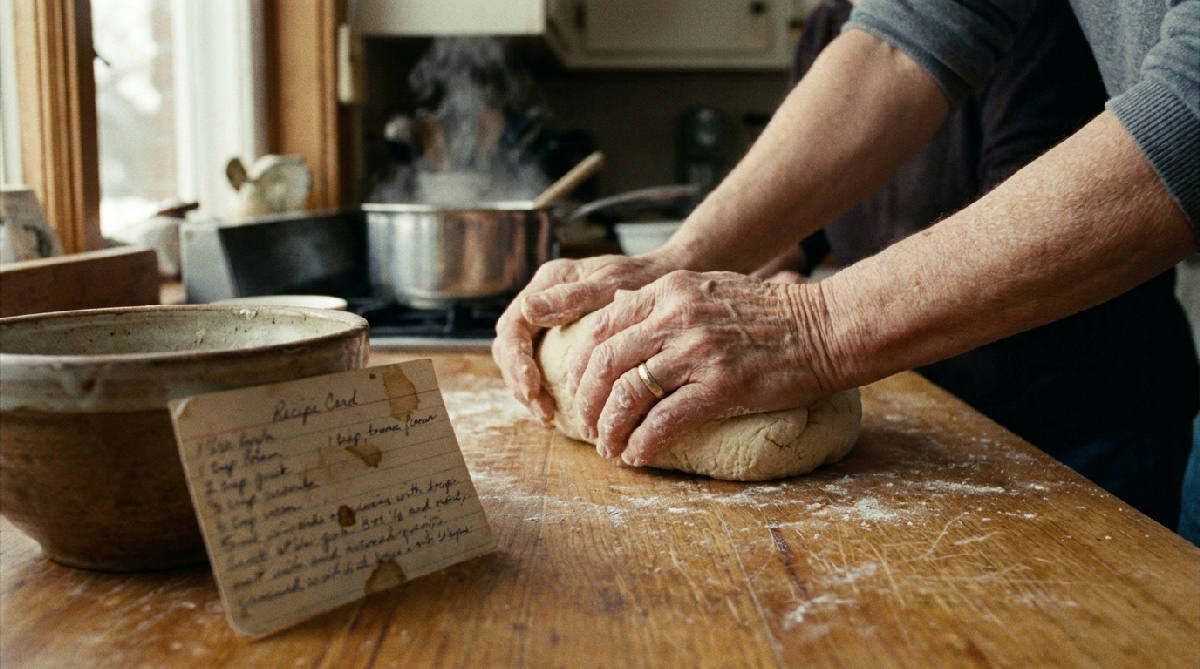
Think of one dish. The one **that always meant a certain person.** The **way they made it,** and the **words they used** when they told you how.
Three researchers, Natalie Plastow, Alison Atwal, and Mary Gilhooly, searched four research databases and **reviewed 22 studies** on what food activities mean to people in later life. They found **moderate evidence** that cooking and eating help older adults **hold on to who they are.**
It was not a study about recordings or family stories. Still, it points at something plain: **a recipe carries a person inside it.**
1. What the researchers did
They followed a formal review method. From **8,016 abstracts** found across four databases, they read **167 full papers** and kept **22** that looked at how **food activities** relate to a person's **identity** in older age.
Most were interviews and observations. Only **six** of the studies included older adults alone, so many mixed ages.
A big search, a careful sort, and 22 studies left standing.
2. What they found
There was **moderate evidence** that food activities help older adults keep three kinds of identity: **gendered** (who you were in the kitchen and at the table), **ethnic** (the foods of where you come from), and **community** (the meals you shared with others).
They also found that when **food choices changed** or **health declined,** people took part in food activities differently, and that **threatened** their sense of who they were.
Making and sharing familiar food helped people stay themselves. Losing it was felt as a loss of self.
3. What it can and cannot tell us
The evidence was of **variable quality,** most of it qualitative, and the authors say more research is needed, especially on **men.** The review states the evidence on identity is **moderate,** not settled.
It **did not test recordings, stories, or families.** What it gently suggests is that **the food a person makes is part of how they are remembered.** One way to keep it is to **ask them to tell you the dish, and the story behind it, out loud.**
The recipe is the start. The story that comes with it is the part nobody wrote down.
Food activities and identity maintenance in old agePlastow, Atwal, and Gilhooly, Aging & Mental Health, 2015 (the title of the review)
What you get with LifeScribe
- A 2015 review in Aging & Mental Health by Natalie Plastow, Alison Atwal, and Mary Gilhooly looked at food and identity in later life.
- It searched four databases, screened 8,016 abstracts, and included 22 studies.
- It found moderate evidence that food activities help support gendered, ethnic, and community identities.
- Changes in food choice and declining health changed participation and threatened identity.
- The evidence was of variable quality, and the review did not test recordings or family stories.
- Built on documented research: Aging & Mental Health, 19(8), 667 to 678, 2015.
Start free, with nothing to lose
Just a phone call, free. Ari listens with real interest and keeps your stories in your own voice for the people you love.
The dish, and the story behind it, lives in someone's memory right now. Ask them while you can. It is just a phone call.
Tell them how it was made.
Ari calls, asks about the moments and the meals that shaped you, and keeps your stories in your own voice for the people you love.
Questions grandparents ask us
What did the review find?
It found moderate evidence that food activities help older adults maintain gendered, ethnic, and community identities, and that changes in food choice or health can threaten those identities.
Who wrote it?
Natalie Plastow, Alison Atwal, and Mary Gilhooly, published in Aging & Mental Health, volume 19, issue 8, pages 667 to 678, in 2015.
How many studies did it cover?
It searched four databases, screened 8,016 abstracts, read 167 full papers, and included 22 studies.
Did it study families or recordings?
No. It reviewed research on food and identity in later life. This page makes no claim that it applies to family recordings or life stories.
Why does it matter for a life story?
It suggests the foods a person makes are tied to who they are. A story told out loud and kept can hold the dish and the person together.